How Can Brands Compete in ChatGPT Without Paying for Ads?
AI has become part of how people research and look for products, as well as…


The ever-changing rules of search engine optimisation can be both exciting yet frustrating. Just when you have finally mastered an SEO technique, Google decides to update its algorithm and throws your campaigns into a state of flux, possibly affecting your site’s overall position in the SERPs.
It is important to stay in the ever-evolving SEO loop if you run a website, regardless of whether it’s an eCommerce site for your small business or your personal blog. Why? So you can continually drive traffic, increase your trust, and boost your conversion rate. To help you dominate the search engines and rank for your desired keywords, here are ten things you most likely didn’t know about SEO.
Millions of websites publish content every day and making your mark can prove challenging, but one rule stays the same: the more unique your content is, the more likely it will stand out online. However, the chances of an article going viral can be quite rare and random. It is impossible to predict if an article will grab the attention of many readers, which is why devoting all your efforts and resources to creating the next big thing might be fruitless and a big waste of your hard-earned money.
While some websites seemingly have a knack for creating viral posts that can go nationally or internationally viral, there are better ways to spend your time if you are attempting to reach a local audience. Your time will be better spent writing high-quality, engaging articles for your website, alongside running social media, email marketing and SEO campaigns.
It might be a surprise to learn that duplicate content will not get you penalised. If you don’t believe this is true, all you need to do is look at this quote from the Google Search Quality Evaluator Guidelines, which were published in 2017:
“The lowest rating is appropriate if all or almost all of the MC (main content) on the page is copied with little or no time, effort, expertise, manual creation, or added value for users. Such pages should be rated Lowest, even if the page assigns credit for the content to another source.”
If you read the quote back, you will see they only penalise a site for copied content and not for duplicate content. If you copy content from another website, then expect to be penalised. However, if you duplicate content from your website, you should be fine. However, ensure you use canonical tags to inform the search engines about your preferred website content to avoid a penalty.
It is common for most webmasters, marketers and SEO experts to focus on ranking in Google. However, there are many more search engines that will drive a considerable amount of traffic to your website, and they should not be overlooked when developing a successful SEO campaign.
While Google might rank a website based on its backlink profile, there are search engines that do not include links as a ranking factor. For example, Yandex, Russia’s biggest search engine, no longer consider backlinks when ranking a website. As their search engine results pages are reportedly rife with black-hat SEO techniques, Yandex has now stated their algorithm is link free, and other search engines are expected to follow in their footsteps.
Google is becoming increasingly intelligent with each passing year, which is why object recognition is believed to now be a ranking signal. Image optimisation must be incorporated into an SEO strategy, if it isn’t already, and it should go beyond adding title tags.
Google has introduced Cloud Vision API, which allows developers to easily analyse and identify what is inside of an image. As a result, this can help to place an online image into potentially thousands of categories, as it can detect faces, objects and words within an image. You can then build metadataPut simply, metadata is data that describes data. It’s a labelling system designed to help machines and humans understand what is contained within a packet of data. within an image catalogue, which can make it easier for the search engines to detect the objects inside a website image, so it can rank it accordingly and, in turn, strengthen the ranking of your page.
YouTube is now the second largest search engine in the world and most people’s first choice for watching online videos. Not only are they more attractive than text, but Google also owns the platform, so it is fair to say it will be favoured by the search engine!
You only need to submit a query into Google to find a YouTube video on page one. That is because videos are reportedly 53 times more likely than text results to on page 1 of the SERPs. This can ultimately provide websites with an opportunity to increase their visibility, engage their visitors, decrease their bounce rateBounce rate is the percentage of visitors to a website who visit only one page. A high bounce rate indicates that visitors are not satisfied with your website., and boost their rankings. It will also give your visitors something to share with their friends or across social media.
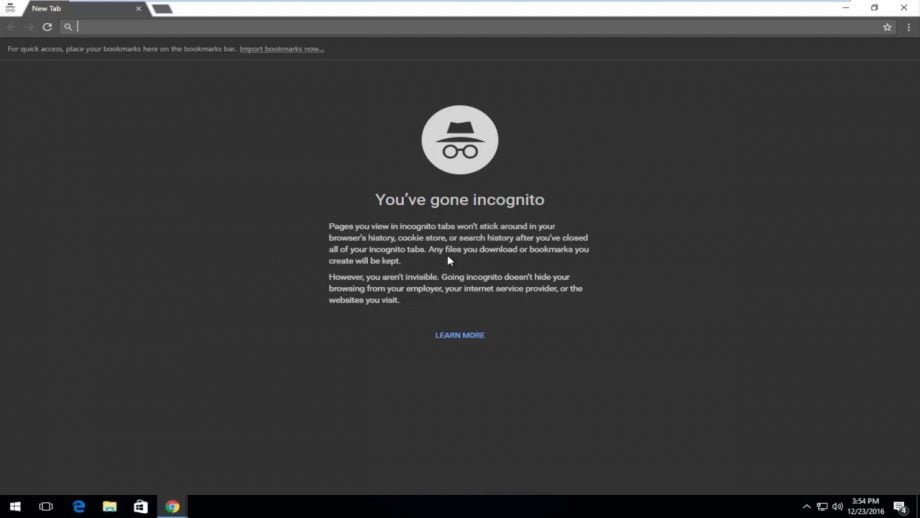
Are you regularly finding yourself at the top of the search engine result pages when Googling yourself? Don’t believe everything you see. If you want to find out exactly where you are ranking for your brand name or keywordKeywords are the words and phrases that potential customers might search for to find your business., you should turn on incognito mode when using Chrome.
If you don’t, there is a chance you will receive personalised results, as Google may show URLs based on what you have seen or clicked on in the past. Incognito mode can, therefore, prevent your browsing history and cookiesCookies are very small files that a website saves on a visitor's computer and uses to recognize repeat visits. from manipulating your search results.
Many SEO experts shudder at the words Panda, Penguin, or Panda 2.0, and might dread the day Google announces another big update that will transform their tried-and-tested tactics. However, you cannot let your guard down just because they have yet to announce a big algorithm change.
Google is believed to update its algorithm not once, not twice, but three times per day. That is because Panda’s software is constantly learning for itself, so it will make updates in real-time.
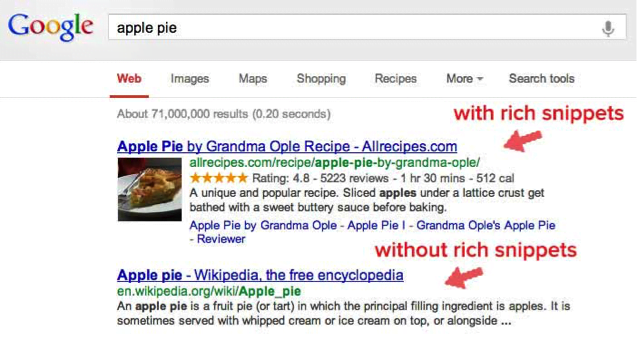 Rich snippets have been providing users with a sneak peek of a page in the search engines since 2009. However, contrary to popular belief, they may not have a direct impact on a page’s rank. According to Google’s Web Master Help Forum, they will provide extra information to a search listing, but they will not directly influence a ranking.
While they cannot have a direct SEO benefit, they can make it easier to index a website and could convince a user to click on a webpage, which can increase your traffic and conversion rateA conversion rate is the percentage of visitors that take a desired action on your site., which might, in turn, help to boost your ranking in the SERPs.
You might think all you might need to contend with is Google’s clever algorithms to rank highly in the SERPs. So, it might come as a surprise to learn that Google has reportedly hired 40,000 precision search evaluators who will review the quality of various search results!
They use evaluators from various countries and who understand different languages, so they can catch spam in more languages, which can affect many sites’ overall rankings. It might be helpful for both developers and marketers to review the search evaluators’ extensive guidelines to familiarise themselves with the rules, which can help them to understand how Google perceives quality.
While Google has yet to reveal many of its 200+ ranking factors, it is believed travel time is a big factor for local search. For example, a business is more likely to appear higher in the search engines the closer it is to a user’s location.
It means a website that is not as well optimised as yours might surpass you in the search engines due to their location – and it also stresses the importance of accurately updating your address online. In fact, a company doesn’t even need to have a presence online to rank higher than you in the search engines, as Google Maps will detail many business addresses to provide their users with valuable, relevant information for their needs.
As you can see, SEO is constantly changing, with search engines regularly making big or small tweaks to their algorithms, which will keep websites well and truly on their toes. If you want to dominate the search engines for your chosen keywords day after day, you must stay up-to-date with the latest SEO news, adjust your campaigns, and alter your strategies to reach the top of the search results.
If a strategy doesn’t work, change it. If it does work, build upon it. The more proactive you are with a campaign, the more likely you will climb your way up the search engines, and the greater your trust, traffic, and profitability.

AI has become part of how people research and look for products, as well as…

If you’ve ever tested your website using Google PageSpeed Insights, you’ve probably been met with…
The search engine landscape is constantly changing; search in 2022 is no exception. New trends and algorithm updates occur all the time in the search engine world.
Here is how to find the perfect link building partner, download today!

While the fundamentals of SEO remain the same no matter the size of your business, if you are an enterprise…
The amount you invest in your link building budget should be based on the realistic…
Search engines aren't the only automated systems accessing, interpreting, and making sense of content found…
There's plenty of scope when creating SEO campaigns. Each industry that turns to experts for…

PR has long supported brands in building authority and spreading awareness, but PR distribution has…
Towards the end of September, on the 24th, Google released the second spam update in…

Some backlinks can help a key service page gain authority, while others help to strengthen…
SEO can be complicated. It’s constantly changing and is not a one-and-done job. That’s something…
AI has become part of how people research and look for products, as well as…
If you are looking to increase your traffic, sales & leads, let's have a chat!

The team will usually respond within 1 hour.