The SaaS SEO landscape couldn’t be more competitive than it is right now, but it also couldn’t be more important for you either. When you develop a SaaS SEO strategy, it can reduce customer acquisition cost, increase MRR, and support product-led growth. However, getting SEO for SaaS companies just right isn’t always easy on your own. It has to consider the entire customer journey, from attracting high-intent organic traffic to converting users into free trial sign-ups, demo requests, and long-term subscribers.
Any modern SaaS marketing strategy will also consider the impact of AI Overviews and LLM-driven search on traditional organic visibility. By working with an agency that is both skilled in SEO and AI search for SaaS, you can develop an organic growth engine that attracts, converts, and retains customers.
Why SaaS Businesses Need a Tailored SEO & AI Search Strategy
Whether you sell CRM, project management, HR, customer support, or accounting software, the SaaS buyer journey is typically long. When a customer first discovers your software, they are unlikely to sign on the dotted line for a subscription. Instead, they will go away and research their options, do comparison searches like “best CRM software”, “[brand name] alternatives”, or “[brand name] vs [brand name]”, and evaluate features multiple times. While they may return to your site several times, their decision-making process isn’t set in stone until they have signed up. Due to this B2B search intent, the best approach is to adopt a tailored SaaS AI SEO strategy.
A campaign of this scale will mean you aren’t just targeting broad keywords; it will also research into comparison keywords, feature-based searches that reflect the customer needs (e.g., CRM with email automation), and enterprise SaaS competition analysis to identify opportunities within such a competitive market. If your SaaS works across global markets, your SEO campaign should reflect this, too. It must account for regional search trends, localisation, and international search intent.
A bespoke AI search strategy for SaaS companies is equally important. AI search behaviour is changing how your target audience discovers, compares, evaluates, and eventually decides which software is most suitable for their needs, budgets, and goals.
Our Expert SaaS SEO & AI Services
As a UK SEO agency highly skilled in SaaS campaigns, we know that it doesn’t just take one form of enterprise SEO to generate success. It takes just the right combination of them. It’s why our SaaS digital marketing agency prides itself on offering technical SEO, link building, digital PR, content marketing, PPC, and white-label SEO support for scalable growth and authority building.
What sets our SaaS SEO agency apart is that we can offer many of these services under a single managed SEO package. Our dedicated account managers are available to discuss our SEO services for SaaS businesses the moment you decide you are ready to embark on this journey.
How We Build Your SaaS SEO & AI Strategy
Our SaaS SEO strategy process consists of six steps, with each one playing an important role in the outcome of your investment.
Step 1: Competitor analysis: It may seem confusing at first why we run a competitor gap analysis before we even look at your site. Doing this first actually helps us understand the current market landscape for you, including the competitiveness of your target keywords, identify backlink opportunities, and help you prioritise your SEO based on more realistic opportunities.
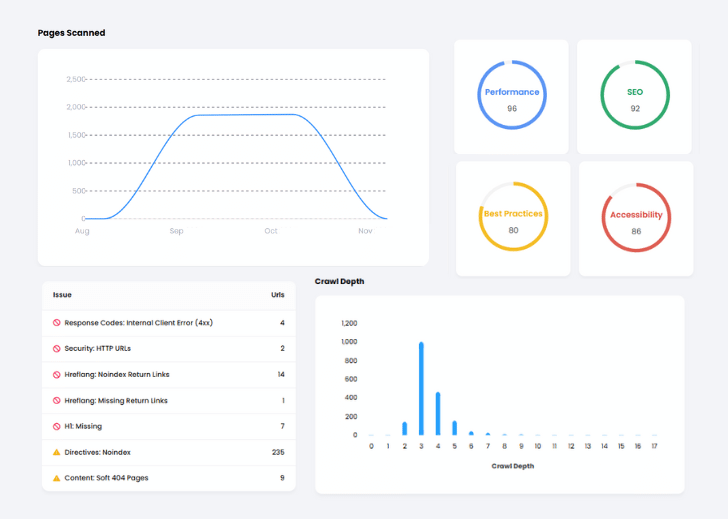
Step 2: Technical audit: Now it’s time to look at your site. We give it a full health check to see what could be improved.We’ll check that it can be crawled and indexed properly, and hunt down 404 errors and duplicate URLs.
Step 3: Keyword research & clustering: We start researching the relevant keywords you will use in your content before identifying the search intent behind each one, a process called search intent mapping. This ensures each of your keywords matches the right type of content. We can then move on to keyword mapping, which is the practice of assigning each keyword to the best page available.
Step 4: Content roadmap & authority building: Everything we’ve discovered now gets combined to form the ideal content roadmap for you. This will detail all the pages that need rewriting or tweaking with a few optimisation efforts, along with new content ideas and the direction of your SaaS link building campaign to build authority.
Step 5: CRO & Performance optimisation: We don’t simply write your content; we ensure CRO and performance optimisation strategies are applied to maximise conversions and drive more organic visitors to sign up for free trials and book demos. We don’t forget about AI here, either. We tidy this up with AI search optimisation for SaaS, for example by looking at content formatting.
Step 6: Measuring & Reporting: As the effects of our SEO strategy unfold, we monitor results. We can set up conversion tracking and organic growth monitoring, along with other relevant KPIs, and present this to you on our analytics dashboard.
SEO Strategy for SaaS Companies
When you look deeper into an SEO strategy for SaaS companies, you’ll learn that there are a lot of moving parts to it. You have link building, keyword research, competitor analysis, internal linking, AI visibility optimisation, technical SEO, content creation, and more. Within each element, it breaks down into further tasks and tactics. Take technical SEO for SaaS. This element of SEO ensures you conduct crawl optimisation, optimise Core Web Vitals, implement schema markup, fix broken links, create XML sitemaps, and add canonical tags, among plenty of others.
The same applies to content creation, but it breaks down into both SEO and AI tasks. For instance, you’ll have AI-friendly formatting to do under the AI bracket, but feature page optimisation for SEO. This is just a fraction of what is involved in content creation and an SEO strategy as a whole. However, with the right experts by your side, it will all look like a breeze.
Keyword Research for SaaS Businesses
There are two elements to getting more sales. First, getting traffic to your site, then converting them. To first get this traffic, we always recommend keyword research for SaaS searches. Some of the SaaS SEO keywords you might want to target include product keywords, feature keywords, alternative and feature comparison searches, as people often look up SaaS alternatives to find the “best SaaS software”, problem-aware, and commercial intent terms. Although there are a lot of categories, each is important. For example, solution-based searches like “Best CRM software” will target customers who are actively comparing products and are close to the final purchasing decision. In contrast, informational searches like “How to manage projects” attract people in the early stages of their research, as they are just learning that there may be solutions out there that can improve processes, workflows, and projects in general.
Keyword Mapping for SaaS Websites
Once you have your keywords, it’s not as simple as randomly selecting pages for them or continually using the best-performing ones across multiple pages. A process called keyword mapping is critical here. When we create keyword mapping SaaS campaigns, we ensure that every page has a purpose by assigning each keyword or its cluster accordingly based on the search intent. This includes your product pages, use-case pages, comparison pages, and blog clusters, with the goal of avoiding cannibalisation (where your pages compete against each other for rankings).
Each page will target a different stage of the buyer journey, but will still work together to result in stronger topical authority, better rankings, and a smoother customer experience throughout the journey.
Once we’ve determined which pages will target which keywords, we move on to creating content silos. This is about organising these pages around a single topic or product. For example, if you sell CRM and HR software, all of the pages relating to your CRM offering, including your product pages, feature pages, industry pages, comparison content, and blogs, would sit in one CRM content silo. You would repeat the same for your HR software, creating a separate silo. As these silos take shape, they begin to form your site structure, creating a clear hierarchy that aids both your users and search bots crawling your site in understanding how your content has been organised. Finally, we create an internal linking strategy that connects related pages within each silo, making navigation easier while boosting your topical authority.
Content Strategy for SaaS Growth
Just like each type of software you develop serves a different purpose, so too does the content on your site. The most successful SaaS content strategy will include a range of content designed to attract users at all stages of the buying journey. You could expect to see:
- Product-led content such as feature breakdowns, pricing pages, and product demonstrations.
- Evergreen content, such as guides, tutorials, educational resources, and industry insights.
- Comparison content, like competitor comparisons, vs pages, and software alternative pages to ensure you are allowing your prospective customers to evaluate their options.
- Pillar pages that cover broader topics but link to supporting resources and articles to help establish topical authority.
While you should always write for users rather than search engines, that doesn’t mean you shouldn’t think about how to make your content more visible in rankings and in AI. The best strategies in content marketing for SaaS consider semantic SEO to maximise visibility. It thinks beyond the keywords you need to include, and is not about keyword stuffing. Instead, it focuses on the topic as a whole, demonstrating a better understanding of the subject matter, which improves your chances of ranking for a wider range of relevant searches.
As experts in AI search, we cannot stress enough the importance of a content strategy that explores AI-optimised snippet formatting and applies FAQ schema. Applying the schema doesn’t directly affect your visibility results. Still, it adds context and tells Google that this is a question and that what follows is the answer, which makes the machine’s job of interpreting it much easier. When combined with quality content, you may boost your chances of visibility simply because you are easier to interpret.
SEO Auditing for SaaS Businesses
What your SaaS truly needs to succeed is an assessment of the website’s health, its content, backlink profile, and AI visibility. Without SEO auditing, you may be counteracting any current SEO work and see little to no results. For example, if your backlink profile is full of spammy, unnatural, and low-quality links, this could harm your credibility and prevent you from earning your full potential.
We always start with a technical SaaS SEO audit, which takes a deep dive into your website to identify crawl errors, indexation issues, Core Web Vitals, broken links, and mobile experience. We follow up this SEO audit for SaaS companies with a content-focused audit. We’ll run a content gap analysis, which will look into opportunities in the form of topics, keywords, and questions you aren’t currently targeting. Then we’ll run cannibalisation checks and hunt down duplicate content. The latter is usually an issue because most SaaS companies operate both locally and internationally and use the same content across all versions of their sites.
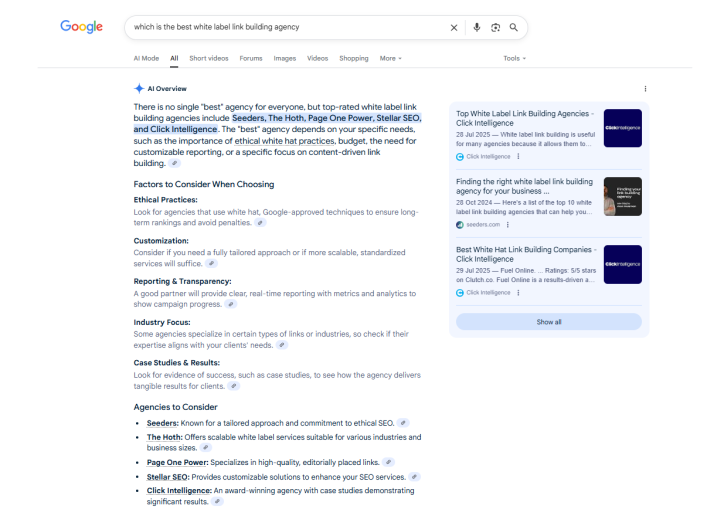
With a backlink analysis audit, we will assess your overall profile to see which links are proving useful to you and which we need to take action on to stop them from affecting your SEO results. Finally, we conduct AI visibility reviews to assess how visible your brand is in AI systems. This will help guide LLM optimisation strategies, including opportunities for citations, content gaps, and content quality.
SEO Audit Checklist for SaaS Businesses
Each audit previously discussed goes deeper than what was covered, so check out the full SaaS SEO checklist below to see just what each involves:
Technical SEO
- Crawlability
- Indexability
- XML sitemap
- txt
- Broken links
- Redirect chains
- 404 errors
- Core Web Vitals
- Page speed optimisation
- Mobile usability
- HTTPS security
- Canonical tags
- Duplicate URLs
- Structured data validation
- Orphan pages
- URL structure
- Crawl depth
- Indexable product and feature pages
Content
- Keyword mapping
- Keyword cannibalisation
- Content gap analysis
- Search intent alignment
- Content quality
- Product pages
- Feature pages
- Use-case pages
- Comparison pages
- Blog content
- Content freshness
- Topical authority
- Internal linking
- Title tags
- Meta descriptions
- Heading structure
- Content clusters
- Content silos
Backlink Audit
- Backlink quality
- Referring domains
- Authority of linking websites
- Link relevance
- Toxic backlinks
- Broken backlinks
- Competitor backlink analysis
- Link building opportunities
- Digital PR opportunities
AI Visibility Audit
- AI brand visibility
- AI mentions
- AI citations
- AI impressions
- Competitor AI visibility
- Entity recognition
- FAQ coverage
- Structured data
- E-E-A-T signals
- Topical authority
- AI-friendly content structure
- Conversational search optimisation
- LLM optimisation opportunities
Google Ranking Factors for SaaS Businesses
What many outside the SEO industry aren’t aware of is that it takes more than just adding a single keyword to your page to rank. Keywords are just one of hundreds of Google ranking factors for SaaS. Therefore, if you are looking at the current lay of the land and discover you aren’t ranking, but your competitors are, it could be that they are meeting more signals than you are. They may be meeting authority signals. Check their domain authority to see how your score compares. If theirs is higher, it is probably because they have been earning quality backlinks naturally and building on their topical authority with regular, comprehensive, in-depth blogs that demonstrate experience and expertise, which increases their dwell time. While domain authority and dwell time aren’t Google metrics, they are great ways to quickly compare websites and see where your efforts should be redirected.
Google aims to match search intent with what the searcher wants, which can influence rankings. If you don’t create a comparison piece for the keyword “Best CRM software”, your chances of ranking for this drop considerably. If the content isn’t in-depth, helpful, or relevant enough, it also becomes harder to rank.
Some other well-known ranking factors include:
- Site structure
- Page experience (are you meeting enough UX signals, like mobile friendliness, HTTPS security, fast-loading pages, etc?)
- Crawlability and indexing
- Content freshness
- Internal linking
As not all are known or confirmed, experts also encourage businesses to meet supporting signals and factors, such as brand signals, engagement metrics, and trust factors. By including reviews about your software, publishing expert content, and maintaining business transparency, you may find that when all these elements come together, you reinforce your website’s credibility. Do note that these are not confirmed as ranking factors in their own right, but if you want to be viewed as trustworthy and valuable, they are still worth the effort.
Local SEO for SaaS (When It Matters)
When you offer SaaS, you aren’t restricted to geographical location. You can serve customers across the world if you wanted as well as right on your doorstep. Whether you do local SEO, international SEO, or a combination, they both serve the same purpose: to make your website visible to the right audience in the right location.
What you choose to focus on depends on your unique goals, whether you have physical office space that serves customers, or if you want to expand your business globally. It is good to have a plan in mind, as while there are many similarities between international and local SEO for SaaS, there are also many differences.
For instance, for local SEO, you would need to optimise your Google Business Profile, maintain NAP consistency, publish local relevant content and backlinks, optimise for map results and the local pack, and collect reviews.
When you have regional targeting in mind, whether France, Spain, or Germany, you must create language-specific versions of your website. It’s no good writing the same copy and translating it into the appropriate languages, either; you must write localised content, as you would for locations in the UK.
Remember that French audiences might have different search intents than German audiences, your prices may vary by country, and there may be specific regulations and cultural expectations to follow. Writing content isn’t enough for international SEO. You will also have to do hreflang implementation, which involves adding hreflang tags to direct users to the correct language or regional page.
Link Building for SaaS
Having the best software in the market is no good if you aren’t viewed as a trustworthy, authoritative source. Your target audience will go to a brand that does have this, even if it doesn’t deliver on every element you do, for the simple reason that they trust it more and have more brand authority online. To build on your current authority, a link building campaign is crucial. Link building for SaaS companies has one goal: build a diverse portfolio of high-authority backlinks naturally. You can do this through blogger outreach, digital PR campaigns, and thought leadership campaigns. If you were to build your SEO strategy with our team, we would also build authority by getting brand mentions and links from industry publications and SaaS directories.
SaaS SEO Content Writing
In theory, writing about your software, how it benefits people, and what it involves should be easy. After all, you live and breathe this subject matter every day when trying to get those sales; you have the experience; you have the expertise. The issue is that not everyone is a content writer.
While you may know everything about your product, conversion copywriting is something else entirely. You have to know how to create conversion-focused product pages, deliver benefit-led product messaging, and how to do landing page optimisation. This is why it is always a sensible move to select an agency that doesn’t just know its SEO and AI SEO, but also what goes into SaaS SEO content writing.
We can create demo CTAs that persuade people at the very pinnacle of their journey to download a trial version of your software. Let our team do feature breakdowns, so your customers can learn more about how it works from start to finish and everything in between.
To meet your customers at the comparison stage of their journey, we can create comparison pages that position your software against competing platforms and highlight why your solution is the right choice. We can even create buying guides that answer the most frequently asked questions your customers have during their journey and write digital PR pieces that get people talking about your software and brand.
Conversion Rate Optimisation (CRO) for SaaS
If you are securing more traffic to your site but you aren’t seeing an increase in sign-ups for your software, it is time to look into CRO for SaaS. SaaS conversion optimisation is about making changes after your website, its content, your CTAs, and more have been exposed to real-life conditions. With this, we may make UX improvements, conduct A/B testing on your onboarding CTAs, and suggest optimising your free trials and demo requests. Demo optimisation and trial sign-up optimisation efforts will take the traffic you are earning and boost a percentage of them to request a demo of your software or start a free trial.
Measuring a Successful SaaS SEO & AI Campaign
Your backlinks are forming, your website is technically sound, and your content is conversion-ready; the only thing left to do is measure SaaS SEO success and see if you get a boost in demo bookings, traffic, organic growth, MRR, or sign-ups. It is only by monitoring several SaaS SEO KPIs that you will be able to measure whether your campaign has been successful. These will show what your SEO campaign is doing for business growth and not just website visits. You may have noticed a boost in sign-up conversions. By doing attribution modelling, we can determine how much SEO deserves the credit for this. For example, you may have altered your calls to action to achieve that boost, resulting in a reduction in Customer Acquisition Cost (CAC) and scalable growth.
It’s not just your search KPIs that require monitoring. AI impressions measure how often your brand or its content appears in AI searches.
SEO Reporting & Tracking (Click Insights)
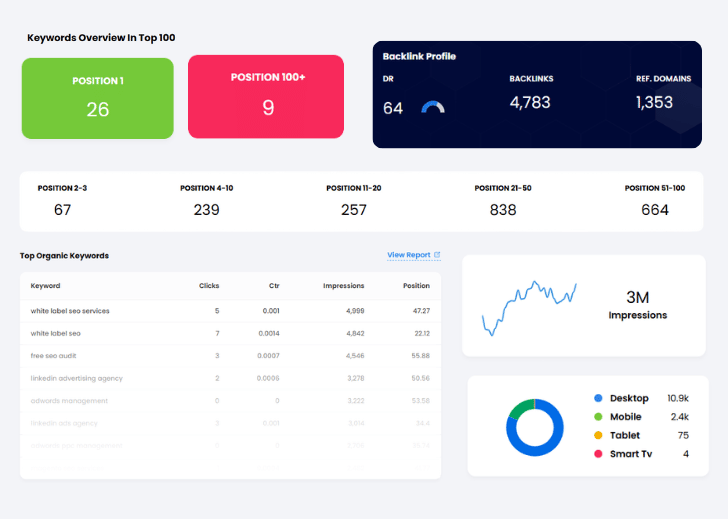
Measuring results is one side of the coin. The other is reporting it back to you. With a transparent analytics dashboard, like our Click Insights, we will upload a monthly SEO report that covers all of your SaaS SEO performance tracking. It will also contain ROI measurement, revenue attribution, and KPI monitoring.
Doing SEO reporting for SaaS companies in this way keeps the promise of transparency and builds even more confidence in the experts behind the SEO campaigns.
SEO & AI Search Tips for SaaS Businesses
There is a lot of information to process when it comes to SEO, from what is involved in technical SEO and how content strategies are formed to which AI search optimisation tips work best, and how to act accordingly for local and international SEO. While everything here is important, there are a few key SaaS SEO tips worth keeping in mind:
- Answer FAQs and implement schema markup where appropriate to help search engines better understand your content.
- Cover a topic in depth with semantic search, optimised around the user’s intent rather than focusing just on the keyword/s.
- Create comparison pages, such as brand vs. brand comparisons, so that you can target customers at the comparison stage of the buyer’s journey. Highlight features, pricing, differences, benefits, and more.
- Keep structured content clear and concise, using bullet points and tables to break up large chunks of text and improve readability for users and search engines, which could help with AI Overview targeting.
- Answer questions within 40-60 words directly below a heading so that Google can easily extract your content to appear in featured snippets or AI overviews.
SaaS SEO Pricing & Costs
As a SaaS, you may be very familiar with how service costs are calculated. There is no one flat rate. When it comes to SaaS SEO pricing, certain services may offer tiered pricing models. These will go up in price but offer more support and additional service elements in exchange. The SaaS SEO rates you pay also depend on the level of support you get. Like you may offer lower-priced packages with fewer software features, SEO experts offer basic packages, perfect for small companies or startups. So long as you go with a reliable SaaS SEO agency, you can scale your campaign and its costs up and down as needed.
One of the most cost-effective options for many SaaS businesses looking for long-term growth is a monthly SEO retainer. Again, the overall SEO cost for Saas companies depends on the level of support you need. Still, as SEO is a continuous process that shouldn’t really be halted, the monthly retainer setup is the best option on the market for many. If you have grand SEO plans, this can be a great way to predict your monthly budget.
In terms of actual figures for this enterprise SEO of this sort, most SaaS companies can pay anywhere from £500 to £5,000 upward to £15,000 (but this is usually only applicable to companies looking to do aggressive scaling). If you’re worried that the investment is too much, take a few moments to do ROI forecasting. You’ll quickly see that the ROI you make on this makes the cost worth it.
How to Choose the Right SEO Company for SaaS Businesses
When you’re ready to choose a SaaS SEO agency, you obviously will want to seek out the best in the market. What makes the best SEO company for SaaS isn’t one set quality. It is a combination of factors, including their expertise and technical capabilities, as well as their transparency and scalable strategy. Determining these is simple. Look into their case studies to see the proven results they’ve delivered for past SaaS companies. Even if there isn’t a case study for your industry, the case studies they do have will demonstrate the type of SEO they practice, which in itself is useful. If they use white hat SEO, they are a sensible growth partnership choice. Learning more about the techniques they use, the practices they stand by, and how open they are about results helps you make your decision with confidence.
Partner with Click Intelligence for SaaS SEO
If you want to grow SaaS revenue, request an SEO audit today or book a consultation directly with us. Our SEO AI search experts for SaaS can’t wait to help you achieve your potential. We are the best-placed SaaS SEO agency UK business owners rely upon for real results and a strategic growth partnership.