
There’s no ignoring the competitive nature of the local veterinary sector. If you want your veterinary practice to be the one that people choose, then you need to show up in traditional and AI-powered search results. Fortunately for you, the Click Intelligence team are specialists in all things veterinary SEO, and we pride ourselves on delivering a bespoke veterinary digital marketing strategy for our vet clients that takes into account your business goals and pet-owner search behaviour.

You’ll know that pet owners won’t take any risks when it comes to the health and wellbeing of their precious fur babies, scaly, or feathered companions, so you need a vet SEO strategy that not only makes you stand out online, but positions you as a trusted figure of authority within your industry. This is what will make owners choose you over your local competitors.
We have over a decade of experience providing tailored SEO for vets services that bring measurable results. Local vet marketing needs to capture search traffic for general pet care and emergency-driven searches. It’s not just traditional search engine results that you need to be visible in either. AI search for veterinary practices is just as important as more pet owners turn to Google AI Overviews and LLMs like Perplexity and ChatGPT to find recommended vet services nearby.
When animal clinic SEO is done right by experts like us, it will grow your online presence, generate enquiries, and attract more patients through your practice doors. With the advanced AI and SEO strategies detailed in this guide, you’ll be able to grow veterinary bookings and enjoy long-term success.
Why Vets Need a Tailored SEO & AI Search Strategy
To run a successful veterinary practice with pet owners lining up to join, you need to stand out from the crowd. The only way to do this is with a tailored SEO strategy for vets that puts you front and centre in both traditional and AI search results.
Vets face significant local competition, with practices often overlapping in the areas they serve. This means there could be 5, 10, 15, or even more veterinary surgeries vying for patients in the same area. To come up trumps, you need to rank highly in the Google Map Pack, so you’re top of the pile when pet owners are looking for vets near them.
Search intent also plays a big role. To appear for relevant searches, your website’s content needs to fulfil local intent searches, whether this is general pet care or emergencies. Pet emergencies are scary, and when one strikes, owners often turn to the internet to find a solution. If you’re not visible for keywords like “emergency vet near me,” or owners can’t easily find your contact details, then you risk losing out to the veterinary competition.
It’s not just making sure you’re targeting the right keywords, either. Building trust is massively important in pet healthcare marketing. Trust is a crucial aspect of SEO and AI search strategy for veterinary practices and can be built through authority content, backlinks, local citations, and reviews. This is what will make you visible in results and encourage owners to call your practice. Add AI Overviews that reduce clicks in search. Your website and content need to be set up for AI summary inclusion, so owners can easily find you without having to scroll through results.
The Click Intelligence team always follows best practices in on-page and off-page vet SEO, taking an AI-led approach for maximum impact across search and to increase bookings.
Our Expert Veterinary SEO & AI Services
When you pick Click Intelligence as your veterinary SEO agency, you can be confident that your online presence is in safe hands. We’ve got years of experience providing SEO services for vets just like you that bring measurable results. Our UK SEO agency does this by creating bespoke data-driven strategies that focus on authority building and align with your goals.
Depending on what you want to achieve in AI and organic search, we combine a mix of services to bring you maximum results. This might include local SEO services, technical SEO, link building, digital PR, content marketing, and PPC campaigns. Transparent performance and ROI tracking come as standard so you’ll never be left in the dark about your progress.
Whether you are a small, local vets practice, a national chain, or an agency looking to provide specialist managed SEO and AI SEO services to your clients, we’ve got you covered.
Our vet digital marketing agency handles everything for you so you can concentrate on the care you provide to animals.
How We Build Your Veterinary SEO & AI Strategy
Our SEO and AI search optimisation for vets strategies are always tailored to your practice, its location, services, pet owners, and what it needs. However, some important elements help us develop a strategy that actually delivers results.
Generally, our step-by-step veterinary SEO strategy process looks like this:
- Competitor Analysis – We start by carrying out detailed competitor gap analysis to determine the online visibility of other vets local to you. We’ll look at the content they have and pinpoint new ranking opportunities so you can overtake them in the SERPs (search engine results pages) and AI results.
- Technical Audit – Your website’s technical health is crucial, so we’ll conduct a technical audit to assess crawlability, page speed, mobile friendliness, structured data, and more, identifying any problems that are holding you back from reaching your full potential.
- Keyword Clustering – Our team carries out in-depth keyword mapping, clustering relevant keywords together so your website content can target different queries more effectively. This could be service-led, location-based, emergency, or informational queries.
- Service Page Optimisation – We look at all of your service pages to ensure they align with search intent, boost your authority, and online visibility. Then, we’ll carry out performance optimisation tasks to ensure they’re in the best shape.
- Authority Building – Looking at ways we can strengthen your authority is a big part of our strategy planning. We’ll review your link-building efforts, digital PR, and trust signals, and develop a plan to improve them.
- Conversion Rate Optimisation (CRO) – Conversion tracking helps us understand where your conversions are coming from and how we can improve the customer journey. This might include stronger calls to action (CTAs), clearer booking options, and better page layouts to result in more appointments.
- Reporting – You won’t know if your campaigns are effective without solid reporting. Expect monthly reports and access to your very own dashboard so that you can check in on our progress anytime.
SEO Strategy for Veterinary Practices
We’ve touched on it above, but every successful SEO strategy for vets starts with technical SEO. This lays the foundation for search engines and AI models to read and understand your website and its content easily. Without this, you will struggle to be visible for relevant searches.
In our experience, strong technical SEO for veterinary websites should focus on:
- Core Web Vitals – We check key performance signals in Core Web Vitals, including loading speeds, interactivity, and your site’s visual stability to make sure it offers a smooth user experience. Without this, visitors won’t stick around on your site long enough to convert.
- Mobile Optimisation – Pet owners these days use their phones to search for vets, especially when it is an emergency. To take advantage of these searches, your website needs to load and work smoothly on mobile devices.
- LocalBusiness Schema – Our team implements structured data and schema markup for vets This helps search engines and AI models understand your practice information, including your location, opening hours, services, and contact details.
- Internal Linking – A clear internal linking structure that connects your pages helps search engines understand your most important pages and how they are connected. This strengthens your authority and signals trust.
- AI-Friendly Formatting – How your content is formatted is crucial for AI visibility optimisation. We make sure you have clear headings, concise answers, bullet points, numbered lists, FAQs, and layouts that make sense to improve your chances of being referenced in AI results.
- Crawl Optimisation – If search engines can’t crawl your pages, they can’t index them, which means they’ll never show in search results. This can improve your rankings.
Keyword Research for Vets
Pet owners search with a wide range of intent, so keyword research for vets differs from that in other industries. This makes it important to understand the search intent behind keywords.
Some pet owners might be looking to book a general health check, others might need emergency help, and others might just be looking for advice before deciding to contact you. When you know where these searches fit into the customer journey, you’ll be able to get more value out of your keywords and content.
There are 4 main types of veterinary SEO keywords that practices should be targeting:
- Service-Based Keywords – These are terms people use when they are searching for specific treatments or services your practice offers. For example, “dog vaccinations,” “pet neutering,” and “cat dental treatment,” are used when pet owners want to find a vet practice that offers specific treatments or care.
- Emergency Keywords – Urgent searches like “emergency vet near me,” “24 hour vet,” or “out of hours vet” are used by pet owners who need immediate help. These people are ready to call or book in straight away, so they have high intent, which makes it important for you to target them to improve your visibility and conversions.
- Local Keywords – People will be searching for vet services in their local area, so visibility for these types of searches is crucial. “Near me” terms and keywords that include your town, city, or county are vital throughout your content to get patients through your doors as their local vet clinic.
- Informational Keywords – These are phrases people use when researching symptoms, treatments, prices, or seeking advice on their pet’s health. Targeting terms like “dog vaccination cost,” “why is my cat limping?,” “how often should I take my rabbit to the vet?” in your blogs, guides, and FAQs can help build trust with patients and boost your visibility in AI and organic search.
Keyword Mapping for Veterinary Websites
Keyword mapping for vets is all about ensuring each page on your website has a clear purpose, a primary target keyword, and a small cluster of related keywords to prevent your pages from competing for the same search terms. This is called cannibalisation. Having a clear website structure helps search engines and pet owners move from research to using your services.
Here’s what our team keeps in mind when mapping keywords to your different pages:
Service Pages
You should map high-intent keywords to your service pages detailing the treatments and care your vet practice offers. Terms like “dog vaccinations,” “cat neutering,” or “emergency vet care” should be mapped to the relevant pages. For effective service page optimisation, ensure your service descriptions, booking and contact information, and FAQs are clear. It’s also a good idea to have strong CTAs to persuade visitors to book, and to have an internal linking strategy that connects related services and content to help inform users and build their trust in your practice.
Location Pages
As the name suggests, your location pages should target location-based search terms. These include search terms for your town or nearby towns and cities, as well as “near me” search phrases. When pet owners are looking for services, they narrow their search by including their location in their query. Each page needs tailored copy, directions, opening hours, contact details, and other local trust signals to strengthen local relevance and support Google Map Pack visibility.
Blog Content
Your blog content is the perfect place to target informational keywords that answer comparison or question-based queries. Searches for “What to do if my dog eats chocolate?”, “How often should I take my cat to the vet?”, and “puppy vaccination costs” are ideal for informing your educational articles and guides. It’s a good idea to group your blogs into content silos around specific topics, such as emergency advice, preventive care, dental health, puppy care, and seasonal pet health. To make optimisation even stronger, linking back to relevant commercial pages can improve both your conversions and rankings.
FAQs
FAQs pages are where you can target more long-tail, conversational keywords. These are crucial for being visible in AI search. Your FAQs should cover costs, how to prepare for appointments, emergency support, symptoms, and aftercare tips. This is what will get your content surfaced and used in AI results, which is a big win for your visibility.
Content Strategy for Veterinary Practices
Content marketing for vets is all about making pet owners feel informed and reassured. Your content should be educational and provide real-world advice to help build that all-important trust. This is what will ultimately persuade pet owners to choose your vet’s surgery and grow your authority with search engines and AI models, which will be more likely to recommend your services.
Educational blog content, pet care guides, seasonal pet care advice, and genuinely helpful and clear service pages and FAQs can all help position your veterinary practice as one of the best. The Click Intelligence content team knows a thing or two about crafting top-quality content that meets Google’s E-E-A-T (experience, expertise, authoritativeness, and trustworthiness) and helps improve your credibility and visibility in both traditional and AI-driven search.
We make sure that every veterinary content strategy we work on is set up for AI inclusion. Our team does this by ensuring content is written in an answer-first style and structured in a way AI prefers. Think clear headings, bullet points, numbered lists, and FAQs. We’ll also be sure to implement FAQ schema, or structured data, correctly so that AI models can parse and understand your content and its context easily for snippet capture.
SEO Auditing for Vets
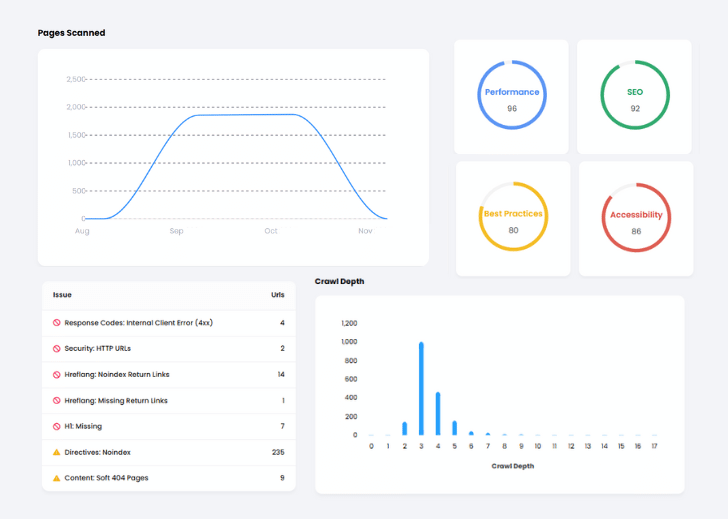
You might have the best veterinary team in your area, but if your website is difficult for search engines to crawl, slow to load, or has other technical issues holding it back, search engines, AI models, and pet owners won’t be able to find you. That’s why we always begin our SEO services with a veterinary SEO audit. Think of it as a full health check for your website that helps uncover anything untoward that might be undermining your rankings, visibility, and user experience.
A typical SEO audit for vets looks at:
Technical Audit
Technical SEO auditing checks whether your website can be properly crawled, indexed, and understood by search engines and AI models. We check for crawl errors, broken links, redirects, page speed issues, mobile performance, metadata, site structure, internal linking, XML sitemaps, and schema markup. Identifying issues helps speed up crawling and indexing and ensures that search engines and AI models can easily understand your content, then put it in front of search users. For vets, this is particularly important for key pages such as emergency care, location, treatment, and pricing.
Local SEO Audit
Local SEO performance is vital for vets. A local audit assesses how well your website performs in local search results and the Google Map Pack. This entails checking Google Business Profile (GBP) optimisation, NAP consistency (name, address, and phone number), local citations, reviews, opening hours, and local keyword targeting. This is so important, as pet owners often search with immediate local intent, using terms like “local vet clinic,” “vet open near me,” or “emergency vet near me.”
Backlink Review
The quality, relevance, and authority of your backlinks can have a knock-on effect on your own credibility and authority. Ideally, you need to focus on strong links from local organisations, pet blogs, local news sites, directories, and pet charities, which can help make your authority and rankings stronger. A detailed backlink analysis also helps spot low-quality or harmful links that may need to be disavowed to protect your reputation.
AI Overview Visibility Analysis
AI and LLMs aren’t going anywhere, so vet websites and content need to be structured for machine understanding as well. Consistent brand signals and accurate dealership information support entity optimisation, helping AI search models recognise your veterinary practice as a trusted one. Additionally, ensure your content is clear, well-structured, accurate, and easy for AI models to understand. Important pages such as your service pages, FAQs, pet care guides, and emergency information should be formatted with clear headings, concise answers, and relevant schema markup to further boost LLM visibility.
SEO Audit Checklist for Veterinary Practices
The veterinary SEO checklist below details everything an effective audit should include:
Technical SEO
- Run a page speed audit to check loading times and pinpoint anything that’s slowing your website down.
- Review mobile friendliness to make sure pet owners can easily browse your services, phone, or book an appointment from their phones. Search engines also take a mobile-first approach to indexing, so your site needs to be optimised for this.
- Find and fix broken links, crawl errors, and duplicate content.
- Carry out structured data validation to make sure rich snippets are displayed properly in search results, and AI models can understand key information about your practice, services, location, and FAQs.
Local SEO
- Check Google Business optimisation to make sure your practice profile has accurate opening hours, photos, and service descriptions.
- Encourage reviews to boost credibility in rankings.
- Ensure NAP consistency across your website and all online directories.
- Review local landing pages to make sure they include clear location details, service information, directions, and local trust signals.
- Review your map pack visibility for important emergency and location-based searches.
Content Depth
- Ensure all website content addresses search intent.
- Check that all of your blogs, service pages, and pet care guides are relevant and up to date.
- Include FAQs where relevant to improve SEO and AI visibility.
- Identify thin, outdated, missing, or duplicate content that could be limiting your performance.
- Make sure content is clearly structured with headings, concise explanations, and internal links to other relevant content on your site.
Authority Signals
- Carry out a backlink analysis to identify high-quality inbound links and disavow poor-quality ones.
- Identify backlink opportunities to grow your authority through local backlinks, pet industry links, and digital PR.
- Check your trust signals on key pages such as reviews, testimonials, awards, team information, and accreditation.
- Regularly assess whether your website demonstrates sufficient expertise and trustworthiness to reassure both search engines and pet owners.
AI Readiness
- Optimise content for AI-driven searches, ensuring it is clearly structured and in answer-led format.
- Tailor content to match user intent.
- Make sure schema markup is in place for relevant pages.
- Use tools to regularly monitor AI search result visibility and identify areas of improvement.
Google Ranking Factors for Vets
To be successful in the SERPs, you need to make sure that your vet surgery meets these important Google ranking factors for vets:
- Authority – You need to prove to search engines and AI models that your vet practice and website can be trusted. Having strong service pages, accurate information, expert-written content, and clear trust signals can help you grow this all-important domain authority.
- Proximity – If a pet owner is searching for a vet near them, Google will consider how close your practice is to their location. This means you need to have strong local ranking signals to boost your visibility for searches related to your area.
- Reviews – Recent, relevant, detailed, and positive reviews not only make pet owners trust you but also help search engines. Having strong review ratings is very important when people compare local veterinary surgeries.
- Backlinks – Growing your authority by acquiring quality backlinks through blogger outreach from trusted publications within the pet industry and your local area shows search engines and AI models that your practice can be trusted.
- UX Signals – Your website needs to be clear, quick-loading, and easy to use so pet owners can find the information they need quickly. Strong UX signals include simple navigation, visible contact details, clear booking options, and helpful service information. All of this is crucial for boosting user engagement.

Local SEO Strategy for Veterinary Practices
Local SEO for vets is essential for helping nearby pet owners find your clinic when they need care. Your local SEO strategy needs to focus on the following aspects:
- Google Business Profile Optimisation
Google Business Profile (GBP) plays a huge part in how your veterinary practice shows up in local results and Google Map pack rankings. NAP consistency across your GBP, website, and directory listings is crucial for visibility. Information such as your services, photos, and opening times needs to be up to date and accurate, too. Appointment links, contact details, and emergency information need to be highly visible so users don’t have to work hard to find them.
- Local Citations
Accurate and consistent veterinary citations in directories and pet-related sites help reinforce your vet practice’s legitimacy and support NAP consistency, which can improve your local search result visibility.
- Reviews Strategy
Pet owner reviews have a significant influence on building local trust and visibility. Encourage satisfied clients to leave reviews. You must have a plan for replying to reviews, whether they are positive or negative. This can help improve your local search visibility.
- Local Keyword Targeting
Targeting local keywords helps your website appear for search phrases that include town and city names and “near me” searches. Your service and location pages need to be correctly optimised for the areas that you cover. This helps you attract pet owners who are actively looking for a local vet.
- Location Landing Pages
Your location pages need to include information that’s tailored to the area you serve. They should make it easy for pet owners to find you and contain opening hours, contact information, and directions. Having these pages properly optimised, you’ll be able to capture traffic from location-based searches.
Link Building for Vets
When done right, link building for vets is one of the best ways to boost search visibility and authority. The goal is to earn high-quality, trustworthy backlinks from relevant websites. This then signals credibility to search engines and strengthens your SERP performance.
These are the types of backlinks that vets should focus on building:
- Local Partnerships – Coverage on local media platforms is a great way to earn authoritative local backlinks. Links from local news websites, community blogs, and business publications help you earn these strong links.
- Sponsorships – Sponsoring local events can help you increase your online visibility and position you as a community figure. This can result in authority links in return as people talk about the events online and your role as a sponsor.
- Pet Blogs – Links and brand mentions from topically relevant blogs, industry websites, and directories help search engines understand your authority as a pet care provider. Quality pet industry links reinforce your credibility and SEO standing.
- Digital PR Campaigns – Digital PR outreach is all about getting your brand mentioned and linked in national and international publications and news sites. Running digital PR campaigns that provide pet industry insights, new data, or unique content can generate media attention and earn you powerful backlinks that help position you as an authority figure within your industry.
Veterinary SEO Content Writing
Content writing for vets needs to balance building search visibility with trust, transparency, and conversion. Your content needs to help pet owners understand your services easily, while reassuring them that their beloved pet is in safe hands with you.
Your content needs to rank well, be primed for AI inclusion, and drive action from pet owners. Whether you are writing blogs or landing pages, they need to be informative and persuasive to guide visitors.
Conversion-Focused Service Pages
Your service pages need clear service descriptions that help pet owners understand what each treatment entails, who it’s best for, when it might be needed, and the next steps. To add to this, booking optimisation is needed to make it easy for website visitors to take the next step, whether that’s booking an appointment online, filling out a form, or picking up the phone. Your service pages don’t just provide information about your service; they also need to be persuasive landing pages that encourage more enquiries and bookings at your surgery. By offering a combination of helpful information, trust signals, and clear CTAs, you can prompt action.
Emergency CTAs
When pet owners are searching in an emergency, they don’t have time to scroll through reams of content to find what they need. As a result, your emergency CTAs need to be visible, direct, and easy to follow. If someone needs immediate help, your content should make it clear how to contact you and what steps to take.
AI-Friendly Formatting
You need to ensure your content is in an easy-to-read format so that both AI systems and users can understand it. Use clear headings, lists, bullet points, and short paragraphs. It’s also a good idea to weave in semantic and long-form keywords, which can help improve your relevance and inclusion in AI results, since search phrases are usually more conversational.
Conversion Rate Optimisation (CRO) for Vets
CRO for vets is what turns website visitors into new patients. It’s a crucial part of improving the user journey and makes it simple for them to take the appropriate steps.
When it comes to conversion optimisation for veterinary practices, there are some essentials that you should never forget:
- Booking Form Optimisation – Your appointment booking forms need to be easy to complete and give pet owners enough space to add details about their enquiry. Good appointment booking optimisation involves removing unnecessary fields that deter people from completing forms.
- CTA Placement – Calls to action need to be present at every stage of the user journey and on key pages, such as your service pages and pet care guides. “Book an Appointment,” “Register Your Pet,” “Book a Vaccination,” and “Contact Us” clearly guide visitors to take action.
- Trust Signals – Testimonials, reviews, accreditation, partnerships, and qualifications all help reassure search engines and pet owners that they can trust you. Make sure you display this information clearly for maximum impact.
- UX Improvements – Your website needs to provide a smooth user experience on all devices, especially mobile. Fast loading times, clear navigation, and accessible information are non-negotiables and help improve conversions.
- A/B Testing – Testing different page layouts, booking forms, CTAs, and button text can help you understand how visitors interact with your pages and identify the most engaging option to encourage visitors to take action.
Measuring a Successful Veterinary SEO & AI Campaign
There are several ways to measure vet SEO success. To do this, there are some important veterinary SEO KPIs (key performance indicators) that you should focus on:
- Organic Traffic – How many pet owners are finding your website through search? See which pages they are landing on to see which are performing the best, and measure the quality of the traffic that comes your way to get a true picture of organic growth.
- Local Rankings – Are your local rankings improving? If you’re seeing positive movement in local keyword rankings, it’s a sure sign your campaign is working.
- Phone Calls – Call tracking helps you measure how your digital marketing efforts are impacting calls to your veterinary surgery. It can help you understand how many calls are coming from organic search, local listings, and service pages.
- Appointment Bookings – Appointment booking conversions show how many users are taking action after visiting your site. This indicates that your SEO and AI SEO efforts are effective.
- AI Visibility – Keeping an eye on AI impressions, AI Overview appearances, and featured snippets shows how your content is recognised by AI search.
SEO Reporting & Tracking (Click Insights)
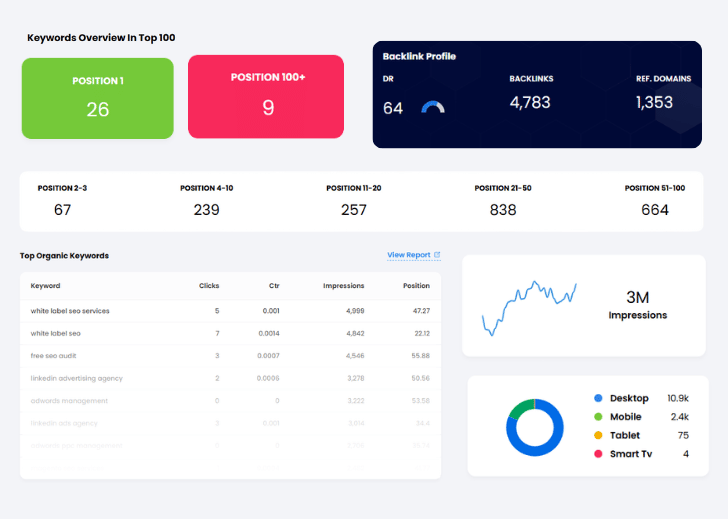
Software like Click Insights makes SEO reporting for vets easy. Click Insights is an analytics dashboard from Click Intelligence that provides in-depth AI and SEO performance tracking so vets can monitor their performance.
It uses data from Google Search Console (GSC) and Google Analytics 4 (GA4) to help you easily monitor key KPIs such as keyword rankings, traffic, backlinks, conversions, AI visibility, and more. Each monthly SEO report gives you clear insights into what’s changed and recommendations for next steps. Click Insights also takes the fuss out of return on investment (ROI) tracking, allowing you to see where leads have come from and inform decision-making.
SEO & AI Search Tips for Vets
Here are our top actionable veterinary SEO tips that all practices should be following today:
- FAQ Optimisation – Add clear answer-first FAQs to service, location, and pet health guides that address common pet owner questions. Doing this will increase your chances of appearing in AI summaries and featured snippets.
- Structured Data – Implement structured data, including emergency schema markup where relevant, to help search engines and AI models understand your content.
- Internal Linking – Don’t forget to link to related content and services throughout your website, as this helps users and search engines navigate your site and understand what you do.
- Semantic SEO – Use related service terms and conversational pet health language to strengthen your topical relevance and inclusion in AI results.
- Structured Content – Structure your content clearly for AI Overviews Clear headings, concise explanations, bullet points, numbered lists, and FAQs make it easier for AI models to understand.
By following these SEO and AI search optimisation tips for vets, you should see a real difference in your online visibility and bookings.
Veterinary SEO Pricing & Costs
SEO cost for vets is a massive consideration when looking to invest in digital marketing. Vets SEO rates can vary widely depending on the scope of your campaigns, the agency’s experience, and the agreed-upon deliverables. Understanding different pricing models and what to expect from them can help you get the most out of your spend.
- Monthly SEO Retainers – You might need to pay an ongoing monthly retainer that covers performance monitoring, optimisation, local SEO, technical SEO, and content writing.
- Local SEO Packages – Packages that focus on local SEO practices to improve map pack rankings, Google Business Profile visibility, citations, reviews, location pages, and keyword rankings.
- Enterprise Options – Bigger vet practices might need a more advanced SEO strategy, which requires higher veterinary SEO pricing.
- ROI Expectations – To know if you’re getting a good deal, vets should focus on ROI forecasting instead of the upfront cost. Things like bookings, traffic, calls, and long-term revenue growth should be feasible from the outset.
SEO plans for vets all vary, but the best ones are tailored to your unique business and goals. Be aware of agencies that offer SEO services at very low prices. Low prices tend to be too good to be true and can lead to shady tactics and disappointing results.
Here at Click Intelligence, we always provide transparent pricing and clear deliverables to our clients, meaning you’ll always get good value.
How to Choose the Right SEO Company for Vets
When you choose a veterinary SEO agency, you must think carefully about what you want to achieve and whether the company you are considering can fulfil that. The best SEO company for vets will have a deep understanding of local search and how factors such as trust signals, emergency search intent, service page optimisation, and reviews combine to influence pet owners and search engines.
Always look at the agency’s proven results and case studies, as these will tell you more about their industry experience and capabilities and give you a clearer idea of what they can offer. No reviews or case studies are a red flag. You want to make sure as well that the agency you go with uses only white hat SEO techniques, including ethical link building, human-written content, and technical expertise. Always avoid agencies that seem to take shortcuts, as this could do more harm than good to your online presence.
Transparent reporting is also key. You should never be left in the dark about the progress of your campaigns. So you want to make sure that you’ll have regular communication throughout. By choosing the right agency, you are forming a strategic partnership that can change the future of your business.
Partner with Click Intelligence for Veterinary SEO
If you want to grow veterinary bookings, improve local visibility, and stand out in AI search, then look no further than Click Intelligence. As a top veterinary SEO agency UK, you can rely on us to develop strategies that combine a range of important SEO factors to deliver the results you need. Our AI search experts for vets can help your website become easier for search engines, AI systems, and pet owners to understand. Sound good? Request an SEO audit or book a consultation with our friendly team today. We’ll create a long-term growth strategy that supports your practice. The result? More visibility, more appointment bookings, and more revenue.