
Educators play such an important role in the world, teaching the next generation and helping those with a passion for learning of all ages blossom. The problem is being able to actually connect schools, universities, colleges, online learning platforms, EdTech providers, vocational training, and countless other business models in the industry with the right audiences. This is where digital marketing for schools and educational providers comes in.
With the right university marketing strategy built by experts like us, higher education institutions can strengthen authority, boost online visibility, build trust with prospective students, and drive student applications. Without SEO, any students searching for the “best business school” or “degree apprenticeships near me” won’t discover your brand.
What makes SEO even more important for the education industry is the current lay of the land. Competition is incredibly tough in this sector, and it’s only getting tougher. Schools are battling for student enrolment growth more than ever before, but are struggling to put together quality higher education SEO campaigns that boost visibility. When you throw in the fact that AI search results are changing student search behaviours, with many preferring to use Google SGE/AI Overviews to find information on prospective schools and their online education options, this means relearning a whole new ball game.
Whatever form of education you find yourself in, it’s time to take a step back, switch roles, and become the student for a little while. As specialists in school, higher education, and EdTech SEO, we can help you start experiencing traffic that converts into students, bolster your trust and credibility, and improve your visibility in AI-powered search.
Why the Education Industry Needs a Tailored SEO & AI Strategy
All industries can use SEO, but if every single one of them followed the same playbook, the strategies would fail to deliver their full potential. Putting together a generic SEO won’t work for you or your competing schools. Anyone who hopes to succeed with both traditional SEO and AI search needs to move away from generic strategies and towards a tailored approach. Here’s why:
- The Competitive Nature of Education Search is Intense
Despite students in their droves doing course comparison searches, competition to win these searches isn’t easy. With the rise of digital platforms, evolving student expectations, and a growing number of educational providers worldwide to choose from, competition has heightened. You are no longer competing only in your local area or even your country. Students have more choices than ever before and will go with what best suits them. Winning them over, therefore, has got decidedly harder.
Those in more rural areas will find the appeal of digital platforms, while some will want to experience a whole new world, not just get a degree. All of this said, many will still be doing local searches, making local targeting a crucial element as well. The trick is to find out who your ideal target audience is. Once you know who your target audience is, you can tailor your campaign to attract them and display what makes your course or school unique and the right fit for them.
- AI Search & LLM Overviews in Education Queries
AI search overviews are making things very interesting for educators. While traditionally a student might use a search engine to search a query like “teacher courses UK”, look through a few websites, and visit a couple of potential facilities, with AI Overviews, within minutes, they can easily browse and compare the quick summary of the best options available to them. What AI has bought with it is a more conversational tone. They might use the AI system to ask “How long does it take to become a teacher in the UK?”, “Do I need a degree to become a primary school teacher?”, or “Can I get funding for a PGCE?” These are all opportunities for you to show up.
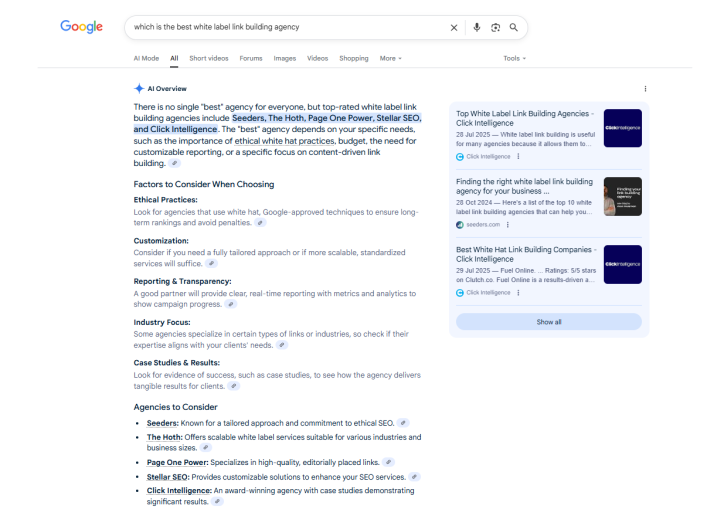
If you aren’t displaying in the Google AI overviews education results, you could be missing out on some quality traffic, but again, a generic strategy won’t help you out here. A tailored strategy helps identify the topics and content your specific target audience is seeking; it also promotes the effective use of E-E-A-T in educational content and can map out every stage of your students’ journeys, so you can remain visible at these crucial moments.
- Student Journey & Search Intent Complexity
Unlike a lot of industries, the education sector often faces a much longer student search journey, often weeks or months, on occasion (for those really planning ahead), years. You must adapt your SEO campaign to account for these long decision-making journeys. A prospective teacher might start their search a year before with the question, “Is teaching a good career?”
In time, they might be searching “How do I become a teacher” and, as they journey towards you, start asking for the “best teacher training courses in London”. All these searches are good opportunities to cement yourself as a credible option, but because search intent evolves continuously throughout this journey, generic SEO strategies won’t work.
You need relevant content at every stage of the journey that matches the search intent. When asking about whether teaching is a good career, they are simply exploring the career option as an idea. They don’t want to be bombarded with information about how great your school or programme is. You want to guide these students gently through to the next stage by exploring what they can expect from teaching. E-E-A-T content of this type will only seek to benefit you and them.
- Seasons Impact Results
Without fail, student recruitment follows a very predictable cycle every year. For higher education providers, there are UCAS application deadlines in the spring, A-Level and GCSE results day in the summer, open days from the start of the summer right through to the end of Autumn, and enrolments between September and October. You’ll find that searches increase around application deadlines, and a surge occurs in the summer, with many looking for clearing and alternative courses/options based on their results. As the new school year approaches, you might again experience a surge in traffic as people search for opportunities they may have. It is during these times that you can invest more in your SEO campaigns and actually see results. Run a generic one year-round, and you could miss out on new students.
- Compliance within the Industry
From advertising regulations to data protection and accreditation standards, educators must consider all of this when developing an SEO strategy. You can’t make misleading claims; instead, you need reliable data to support them, demonstrating transparency. Given that trust is so critical here, abiding by these standards ensures you only continue to boost visibility, credibility, and user confidence in your service. If you opt for the generic route, you risk damaging your reputation, trust, expertise, and authority.
Our Expert Education Industry SEO & AI Services
As a UK SEO agency, we are perfectly positioned to help you avoid the generic SEO campaign route. We offer you a tailor-built alternative that brings long-term, cost-effective results. Let our team create a technical SEO campaign, complete with an audit, and then explore our link building services to build up that authority. Ranking well is only part of the journey. Once you start experiencing more visibility, we can start creating digital PR campaigns and let you see the content marketing agency side of us. Both are critical services that can build authority, educate, and convert. As all this goes on, you might like to see some faster results. If you have the budget, we recommend our PPC service. With this, you can gain immediate visibility for highly competitive keywords, which during seasonal peaks could make a huge difference. For all our services, we pride ourselves on helping our clients see measurable ROI. Our data-driven, scalable approach is what enables us to do so.
If you aren’t seeking SEO or PPC help for yourself, our agency delivers here, too. With white label SEO, you can trust us to provide results for your university, school, or online platform brands. They get the results; you get the credit!
How We Build Your Education Industry SEO & AI Strategy
With our SEO services, we get asked a lot about how the process works. We follow a five-step process that goes as follows:
Step 1: Research & Market Analysis: We want to see how you are currently performing in the market, so we run a competitor analysis, conduct industry research to ensure accurate data, and learn more about your specific audience.
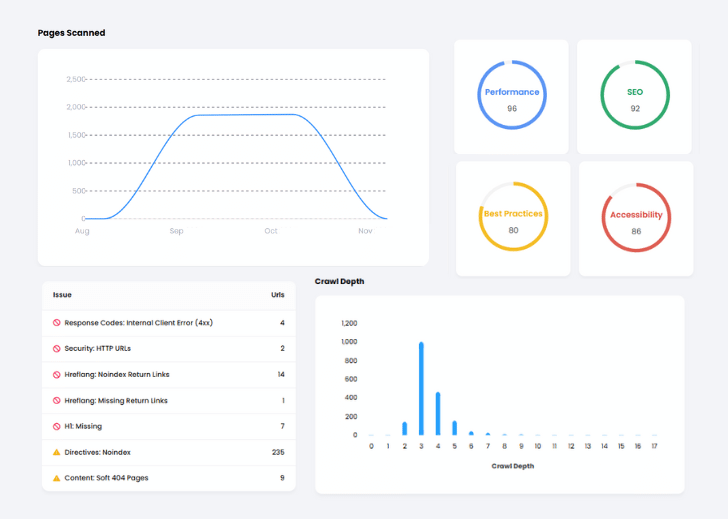
Step 2: Technical & AI Search Audit: Next, we conduct a technical SEO audit of your website. We look at every nook and cranny, from your crawlability to your site structure, internal linking, and your core web vitals. Any performance issues will be identified and documented in a report. An AI search visibility audit is also carried out at this stage to help you secure all that extra traffic from these platforms.
Step 3: Keyword Research & Mapping: With keyword research, we identify the long-tail, local, question-based, and other keywords you have. Once we’ve gathered the keywords you need, we develop a keyword strategy that includes a keyword mapping framework and search intent mapping to prevent keyword cannibalisation. Doing so also uncovers content gaps and opportunities.
Step 4: Content & Authority Building: Once we have the required details, we can move forward with content creation and link building.We put the keywords we discovered to good use, suggesting landing page rewrites that could be optimised further and using them as suitable anchor texts.
Step 5: Measurement & Optimisation: By stage 5, everything is set in motion, but we aren’t taking a step back. Instead, we start conducting performance tracking so you can see your CRO, analyse user behaviour, and refine landing pages. Anything we find, positive or negative, is included in your regular reports, along with suggestions on how we can further optimise your site and which A/B test worked best.
SEO Strategy for the Education Industry
Our step-by-step process only touched at the surface of what we do for all of our education clients. To truly understand how we can help you and provide the results you need, it is worth diving deep into the SEO strategy itself. This is what you can expect from a quality, tailored education strategy.
- Technical Foundations
Whether you are talking about buildings or SEO strategies, if you want reliable, dependable results, you need a well-built foundation. To achieve this, we first have to highlight what your website is doing well, but more importantly, where it is falling behind. It is these findings that enable us to rebuild on much stronger foundations. We look into Core Web Vitals, including loading performance, responsiveness, and visual stability, to see where you land on Google’s Good, Needs Improvement, and Poor scale. The lower the scores, the greater the risk of higher bounce rates, poor UX, lower engagement, and reduced conversion, which is far from ideal in a competitive industry like yours.
Structured data for education businesses and institutions is extremely valuable, so we take the time to review how your content is interpreted and displayed on search results (including AI). Depending on your particular area, we might suggest you include:
- Schema markup for courses for individual course pages to help Google understand more about what you teach.
- Event schema, useful for open days.
- FAQ schema that can help you provide answers to common burning questions students, their parents, or curious individuals may have.
With mobile search popularity still surging, we also prioritise exploring mobile-first indexing. If your mobile site is slow loading but then presents unreadable small text, poor navigation, and buttons that are difficult to press, Google will struggle to understand you and rank your content, and your prospective students won’t find you.
- On-Page SEO
Once we know what needs reworking, improving, or refining, we can optimise your site. On-page SEO can involve incorporating keywords into your existing pages, specifically on your page titles, headings, URLs, meta descriptions, and image alt text. It can also be woven into existing content. We might recommend rewriting any existing content, however, to ensure you are demonstrating E-E-A-T, organising content logically, and answering user questions. In addition, you can expect more internal linking, structured data implementation, user experience improvements, and changes to CTAs.
- Authority & Trust Signals
Trust couldn’t be more important for education businesses. People are spending time, money, and effort to boost their prospects, and choosing incorrectly could have long-term consequences, affecting their careers and earning potential. They need to know that they can trust you; they need that confidence. It’s why so many people spend a long time at the research stage of the buyer journey, looking into the quality of the school/qualifications, graduate outcomes/results, tuition fees, student support, and more. Our SEO strategies ensure you hit these authority and trust signals through reliable methods like link building, digital PR, and content marketing to build topical authority and demonstrate expertise. You can back these up with accurate, up-to-date data, evidence of industry partnerships, reviews, and by optimising your site for trust elements such as privacy policies, secure HTTPS, and staff profiles.
- AI Search Optimisation
From structured data to E-E-A-T, AI visibility optimisation is vital for your SEO campaign. As part of AI search optimisation, our experts will conduct an AI visibility audit. We do this using our Click Insights tool. With this, we can research the conversational queries your audience is using on AI systems like ChatGPT and AI Overviews. From here, we can create answer-focused content that AI favours, and further build on your topical authority. As E-E-A-T is so important here, we will help you strengthen these signals by suggesting ways you can add more expertise and experience to your content, such as citations and author profiles. We even make time to optimise entities and improve your schema markup to help AI systems better interpret your content.
Keyword Research for Education Websites
Keywords are essential to a successful SEO outcome. These are the terms real people (prospect students or their parents) are searching for on search and AI search. These keywords range from course keywords to information, commercial, and branded keywords to local long-tail keywords. While you may think it’s excessive to focus on gathering so many types of keywords, they all prove useful and offer different benefits.
- Commercial vs Informational Keywords vs Branded
We always suggest a balanced use of commercial, informational, and branded, but what are the differences?
- Commercial keywords usually occur at the commercial stage of the journey and could include “best teacher training programs,” “universities with business degrees,” “postgraduate courses UK.”
- Informational happens at the very start of the journey, when awareness is just forming, and includes examples like “what is a PGCE,” “what is clearing,” and “how does student finance work.”
- Branded keywords are any terms that contain a form of your name. These require searchers to know about you. For instance, it could be as simple as “University Name,” but it could also be “University Name courses,” “University Name tuition fees,” or “University Name clearing.”
There can be cross over with some types of keywords. For example, course-specific keywords like “MBA courses” and “primary teacher training courses” count as commercial, but “what is an MBA course?” and “How long does a primary teacher training course take?” are informational.
- Local Education Keywords
While students have the chance to educate themselves overseas, you would be surprised at the number of potential applicants who are still right on your doorstep. Whether these are working parents, young students who want to save money by living at home, or people who want a career change and don’t want to move away to do it, they will all be searching using local education keywords. This could be “MBA Manchester” or “Primary teaching degree Bristol”. Alternatively, they might search more broadly, like “colleges in Manchester” or apply specific events to it, like “university open days London.”
- AI Search Query Trends
AI search queries are totally different from the keywords you would target for traditional search. They are conversational and have proven useful as research assistants, making student intent keywords far more important here. Rather than simply typing in “PGCE degree,” they might enter “What is the best route into teaching later in life?” The best way to uncover the keywords they are using is to use a tool like Click Insights, which lets you take the keyword ‘PGCE degree’ and generate 5 prompts your audience might be entering.
What To Do With These Keywords Next
Gathering all these keywords can get messy if you don’t stay organised; this is where keyword clustering comes into action. Group together any related keywords that share the same intent. For example, you might have a cluster of teacher training, consisting of keywords like:
- Teaching training course
- Teaching training programmes
- Routes into teaching
Then you might have one for PGCE, which includes:
- PGCE courses
- PGCE qualifications
- What is a PGCE
For each keyword you have, see what cluster you can group it under, but don’t forget to note the intent. Once this is complete, keyword mapping can take place.
Keyword Mapping for Education Sites
With the clusters sorted, it’s time to assign them to pages on your website. Your teacher training cluster would need to go on the teacher training course page, for example, your faculty clusters on your faculty pages, and so on. By running through this process, you are creating content silos. From this, you can start to make improvements to your site architecture and SEO page hierarchy, ensuring that the pages you want to rank do so and do so well. As the course, subject, career, and blog clusters fall into place, we implement an internal linking strategy to further cement the impact of the keywords.
Skipping either keyword clustering or mapping can lead to too many pages targeting similar words, causing your local landing pages to compete with each other for these terms (keyword cannibalisation).
Content Strategy for Education Providers
We’ve only briefly touched on content so far, but for educational providers wanting to compete successfully, they need to develop a content strategy tailored to them. As part of what experts like us offer, you should expect the following:
- Pillar & Cluster Strategy
Pillar content comes about from topic clusters. Say you want to attract students with career information, and you’ve identified your keywords and clustered them; from this, you can then create a pillar page. Other similar topics then support this. For instance, your topic cluster of professions can lead to a pillar page on teaching careers, which you can support with pages on:
- How to become a teacher
- PGCE Funding
- Teacher salaries
The pillar page is the parent page in your content silo, providing a much broader overview. Your supporting pages allow you to explore the topics in more detail. Internal linking is always recommended here. More often than not, pages like this are informational and prove to be really useful student resource content.
- Course Pages & Conversion Content
Course pages and conversion blogs are designed to do more than just supply information. They want the reader to sign up for their course, enquire about visiting, or get that funding. Course pages are the strongest way to get conversions, but you can also include:
- Open day pages
- Landing pages like funding and fees pages
- Case studies/success stories on your blog
With these pages, you can expect to find plenty of trust signals, strong CTAs, testimonials, contact details, benefits, application information, and clear next steps.
- AI-Optimised Educational Content
When writing content, for anyone who wants to boost visibility in AI platforms, they must think differently about the way they create content. AI content optimisation involves doing structured content for LLM extraction and FAQ schema, for example.
SEO Auditing for Education Industry
SEO Auditing is how experts uncover what is working and what isn’t. Audits that can be run include:
- Technical
- On-page
- Content
- Backlink
- Local
- AI
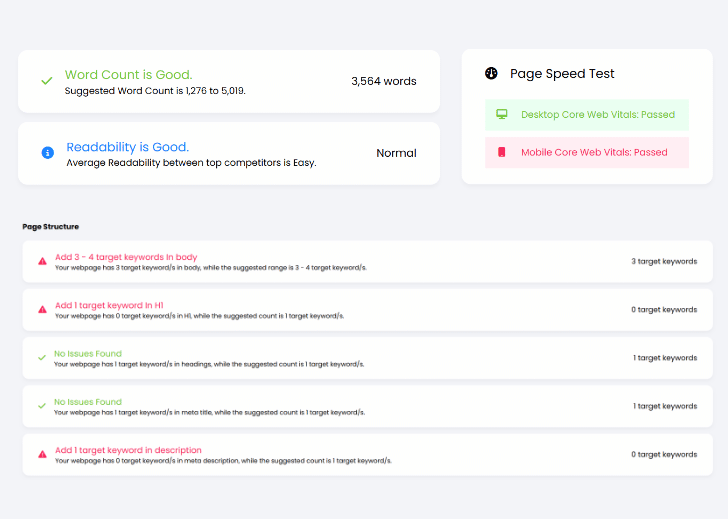
As part of our standard audit, we conduct a technical check, covering everything from crawl errors and indexation issues to broken links and canonical tags. Site speed, duplicate content issues, and XML sitemaps are also all looked into. This is just the beginning of what we look into on the technical side.
An on-page SEO audit covers elements such as title tags, meta descriptions, keyword targeting, content quality, and search intent alignment. Although an on-page audit examines content, the best way to assess it is with a dedicated content audit. This looks at content gaps, outdated content, topical authority, cannibalisation, and AI search readiness.
With a backlink audit, this assesses the situation your backlink profile is in, looking at the quality of links, running a competitor analysis, link and digital PR opportunities, and if you have any that are harming you. Local audits check your location pages, keyword targeting, NAP consistency, and optimisation efforts on your Google Business Profile.
An AI search audit assesses your current entity optimisation, structured data, search console analysis, and content depth. In contrast, an LLM visibility audit provides details on where you are showing up in AI platforms and for what terms.
SEO Audit Checklist for Education Industry
Technical
- Page speed audit
- Crawlability and indexability
- XML sitemaps
- txt
- Broken links
- Redirects
- Canonical tags
- Duplicate content issues
- Core Web Vitals
- Mobile-first indexing
- Structured data/schema markup
- HTTPS security
On-Page
- Title tags
- Meta descriptions
- Heading structure (H1s, H2s, H3s)
- Keyword targeting
- Content quality
- Search intent alignment
- Internal linking
- Image optimisation
- URL structure
Backlink
- Link quality
- Competitor backlink analysis
- Digital PR opportunities
- Link opportunities
Content
- Content gaps
- Outdated content
- Thin content
- Cannibalisation analysis
- Topical authority
Local
- Local citations
- Location pages
- NAP consistency
- Google Business Profile
AI optimisation
- E-E-A-T signals
- Schema implementation
- Conversational search opportunities
- Content depth
- Entity optimisation
Google Ranking Factors for Education Industry
Google considers multiple ranking factors when deciding where to rank you and your competitors. This includes authority, content depth, backlinks, local signals, user engagement signals, structured data, and brand trust. Knowing what your domain authority (while it’s not a ranking factor) is a particularly useful place to start. As Google looks into dwell time, trust signals, and review signals, these are the next things to assess. Dwell time indicates the quality of your content; for instance, if people aren’t spending enough time on your content pages, we would suggest improving them.
Local SEO for Education Providers
While students aren’t restricted to schools in their local area, that doesn’t mean that you don’t have prospective students who want to be educated closer to home. Without local SEO, you would struggle to gain their attention. Local SEO for beginners involves Google Business Profile optimisation. With this, you must:
- Claim and verify your profile
- Optimise information like your name, address, and phone number – NAP consistency is critical
- Work on visual content. This could include images of your educators, courses, the school’s site, or videos of school tours or “meet the staff” sessions.
- Write a description of your school/online platform
- Regularly do Q&As
- Write Google posts
As part of our education SEO local package, for example, we also ensure that review management is handled and that you maintain consistency across your local citations. One recommendation to strengthen your local SEO is to also create location pages with local keyword targeting.
Local SEO Checklist
- Google Business Profile optimisation
- Local citations
- Local landing pages
- Local keyword targeting
- Reviews
- NAP consistency
Link Building for Education Websites
For demonstrating authority, credibility, and expertise in such a highly competitive industry, you need to build high-authority backlinks. Link building can signal to search engines that you have all of these qualities, which could help you rank higher. However, the outcome of this will depend entirely on the quality of this approach. For example, those who invest in digital PR outreach and blogger outreach are more likely to secure relevant, authoritative backlinks that will strengthen their visibility and reputation, as they build a profile of diverse links.
The type of websites linking to you also matters. If you are gaining .ac.uk links (links from academic and higher education institutions in the UK), you will do far better than your competitors who aren’t. Even if you already hold that domain extension, it is extremely valuable to have these types of links attached to your backlink profile, so long as they are relevant to you and not direct competitors. You might be able to receive links through university research collaborations, academic citations, department or industry partnerships, or student resource connections. Relationship building is so important for link building. The mistake far too many have made in the past is solely focusing on achieving these .ac.uk links. Variety is the key to success here. We want to have:
- Academic backlinks
- Scholarship link building
- Brand mentions
- Editorial and PR links for extended media coverage
- Partnership links
- Industry body links for demonstrating trustworthiness
- Government links
- Educational resource links
- Local links
- Success story links
All of this is what aids your authority building. Experts like our team can build a wide selection of links across relevant websites, but remember, it is still possible to gain natural links on your own. Doing your own research, writing expert content, and creating tools are all useful ways to earn links naturally, not through blogger outreach.
Education Industry Content Writing
Whether you want to gain more links or your goal is to convert more visitors, content writing is your ticket to getting results. With optimised course pages packed full of informative course descriptions, persuasive landing pages, and conversion copywriting, such as enrolment-focused content on your blog or resource hub, you can gain and then guide prospective students to the finish line (in your case, to the application forms), all while building trust.
This content should be written for your students, not search engines, but that doesn’t mean you shouldn’t follow their recommendations about what they expect the top-tier content to have. Google expects accurate, up-to-date, relevant, expert-written, and original content. If it is valuable to the reader, easy to read and understand, and above all, it demonstrates E-E-A-T and matches search intent, positive SEO results should come your way.
The same approach applies to AI. While you should still write for people first, AI-friendly formatting will help you become more visible. Part of this will include:
- Using clear heading structures
- Answering questions directly and as concisely as possible
- FAQ sections, lists, and tables
- Comprehensive topic coverage
- Support it with schema markup
Conversion Rate Optimisation (CRO)
You don’t just want more traffic. You want to convert that traffic. Conversion Rate Optimisation (CRO) is the process of experts increasing the percentage of those who take action on your website. A successful CRO strategy could lead to more sign-ups for student enquiry forms and taking that next step in furthering their education. Say you have 5,000 monthly visitors and only 50 take action. Making landing page optimisations could double this, resulting in a 2% conversion rate. Making UX improvements, conducting A/B testing, and adding better CTAs, trust badges, testimonials, and lead-capture forms could further increase this.
Measuring SEO & AI Search Success
Making changes to your website, building authority around it, and trying to increase CRO mean nothing if you aren’t measuring them. From traffic to rankings and conversions, these are the KPIs that are vital to measure and how you can do it:
- KPIs That Matter
Monitoring organic traffic growth allows you to see which optimsation efforts have returned the greatest interest. The other KPIs worth monitoring include:
- Lead generation metrics
- Ranking improvements
- Conversion tracking, like enrolments (assisted conversions, too)
- AI search impressions
Specific AI visibility metrics include how often your content is cited, Share of Voice, AI query coverage, brand mentions, and content level performance.
SEO Reporting & Performance Tracking (Click Insights)
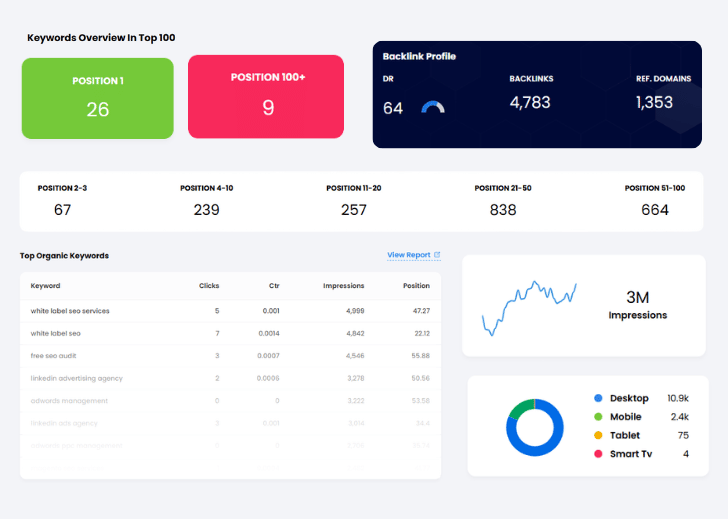
Monitoring your SEO and AI results couldn’t be easier with the Click Insights SEO dashboard. You can monitor which keywords trigger AI search visibility and discover if you are being cited in AI Overviews, for example. Easily compare against your competitors while monitoring familiar aspects of traffic, clicks, and impressions. For the SEO element, look into performance reports, ROI tracking, and analytics reporting. No matter which KPI you are most focused on tracking, you get guaranteed transparent monthly reporting.
SEO & AI Search Tips & Techniques
Curious to give some easier elements of SEO a go yourself? Or perhaps you have a dedicated marketing team coming up to speed with it. These are our top SEO and AI search tips and techniques we recommend starting with:
- Move away from structured data for featured snippets and instead use FAQ schema markup for AI overviews.
- AI visibility formatting should be clear and concise, with tables and lists prominently used.
- Use internal linking across your website to link clusters and make the student journey to applying easier.
- Focus on entity optimisation to reinforce institutional authority and expertise.
- Rather than optimising for keywords, search intent optimisation is the key to success. It ensures content aligns with what prospective students are trying to achieve.
- Implement semantic SEO by writing about relevant topics and concepts to demonstrate expertise for both traditional and AI search.
How Much Should You Pay for SEO in Education?
From quick research on AI systems, you might see that the pricing tiers, retainers, and SEO plans vary from agency to agency. Some do project-based pricing, while others offer monthly SEO retainer services. How much you pay often depends on how many areas of SEO you want to invest in. You may want to start with AI SEO, link building, and digital PR. However, somebody else might choose to start with managed SEO. Therefore, the prices you each pay will be vastly different.
Even within dedicated services, agency pricing models depend on the level of support you want. If you have a smaller marketing budget, an entry-level package might suit you best, but for schools ready to invest more, higher-tier packages will be available. What you pay also depends on your ROI expectations.
While pricing varies, don’t make your final decision based on cost alone. Extremely low prices are red flags in the SEO world. It can indicate low-quality practices, black hat techniques, automated processes, and a general lack of experience. Even if they aren’t low-cost, if they aren’t willing to divulge how they will use your money, chances are that’s because the practices they use are banned.
How to Choose the Right SEO Company
As you begin exploring SEO agencies skilled enough to handle everything required for an SEO strategy to succeed, first consider how experienced they are in education SEO and AI SEO. Generic SEO tactics won’t work; those who understand the education industry are best placed to ensure you have a tailored campaign that works for it.
Then, you want to know that they aren’t all talk. For agencies that claim they can create an SEO strategy with a 95% success rate, look into what this means. SEO case studies could back up their claim by providing information on how they define success, the timeframe they mean, and the industry. They might have a 95% success rate in hospitality and travel, not education. You also want to know whether this was based on rankings, traffic, leads, or revenue. Details matter when choosing. Simply saying “we have a 95% success rate” means nothing if there isn’t a proven track record to back it up.
If they are willing to share such details with you, it stands them in good stead for their reporting. Whether this is for their white hat SEO or linking building, if they offer transparent reporting, you will be able to see exactly where your investment is going and how it is helping you reach your end goal.
Conclusion – Partner with Click Intelligence
You don’t need to go any further to find a team with the expertise that can take your school or online educational platform all the way to success. Our UK-based agency takes an AI-forward SEO approach to help you reach users who prefer AI systems for researching and learning about educational institutions while building a traditional SEO campaign that delivers rankings success. With our drive for measurable growth, you can guarantee that in each regularly issued report, you will see your goal becoming more achievable with each passing day.
Don’t delay any longer. Request an SEO audit or book a consultation with one of our experienced account managers today to arrange to speak to an SEO specialist in our team to grow student enrolments.