
How Can Brands Compete in ChatGPT Without Paying for Ads?
AI has become part of how people research and look for products, as well as…


Schema markup, often known as structured data, can provide your business with a competitive advantage in search engines. As many sites are unaware of the importance of schema SEO, introducing the code to your web pages could help your brand stand out online.
So, what is schema markup? It is a unique form of microdata you can add to your web pages to enhance descriptions, which are rich snippets that appear in the search results. The code enables search engines to better understand a page’s content and it will display it in a rich format to catch the eye in the SERPs.
To help your business stand out on the likes of Google and Bing, read on for our schema markup cheat sheet.
Schema will not directly catapult your site up the search engines the same way as other SEO services, but it will boost your web traffic, click-through rate, and brand awareness.
As it improves the search engines’ understanding of a page’s content and provides more context, it is more likely to appear for relevant searches, driving more traffic to your landing pages.
A better understanding of the content will also result in better page visuals in the search results, as it may display an image, review count, star rating, etc. The enhanced appearance is more likely to grab attention and encourage users to click on your page.
Schema markup coding isn’t complicated. All you need to do is use the right tool to create a code on your business’s behalf before adding it to a web page.
Get started by visiting the Google Structured Data Markup Helper Tool and selecting a data type, such as ‘Restaurants,’ ‘Articles,’ or ‘Products’.
Next, paste the webpage URL into the applicable markup and click “Start Tagging”. Once you have done so, the handy tool loads your chosen webpage on the left side of your screen, and data items will appear on the right, enabling you to mark up the page.

Marking a page is easy, as you only need to highlight the section you need, such as the name (article title), image, or date published. Try to add as many markup properties as possible.

Once you are happy, you can click on the red “Create HTML” button at the top right corner to generate a schema code for your webpage. The JSON-LD format is the default code you will receive, but you can change the method using the drop-down menu at the top.
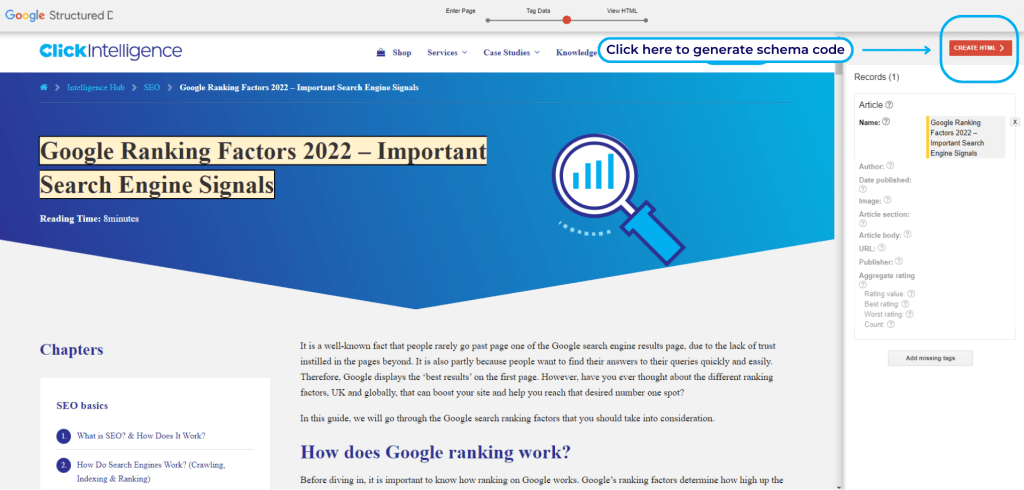
You can copy the code and apply it to the <head> section of your webpage’s HTML as soon as you have your chosen code.
The next step is to test the schema markup on Google’s Rich Results Test tool by entering the code snippet or URL. After you click the “Test URL” button, the tool may display warnings, errors, or detected items, such as “missing field image”.

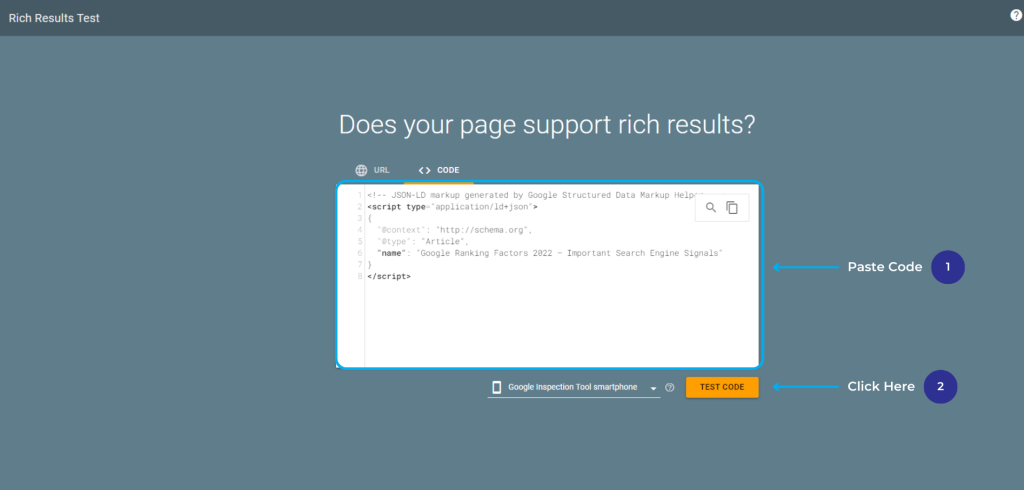
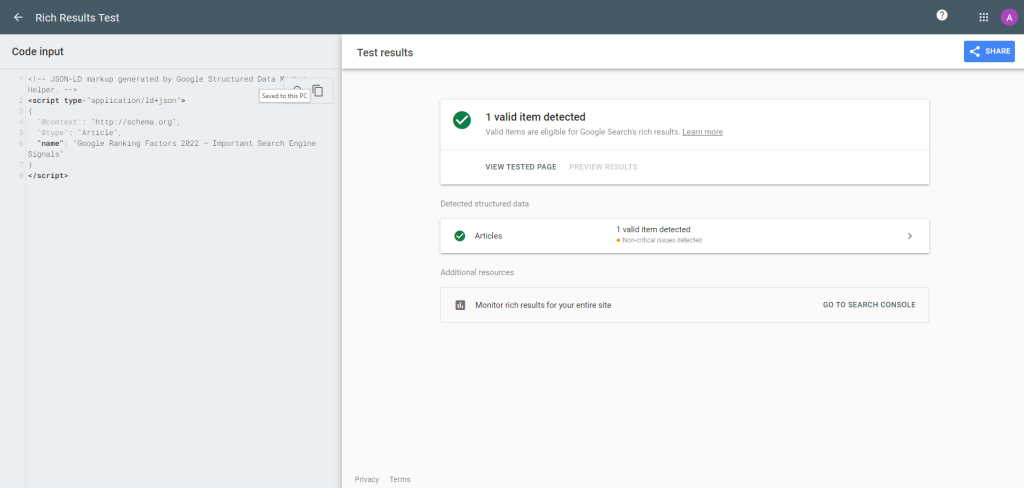
It is simple to fix one or more errors, as you can edit the code on the page’s left side and click the “Run Test” button at the bottom to confirm you have successfully made the changes.
Google currently has 35 schema options, but you only need to use the options applicable to your pages’ content.
For instance, product schema markup provides search engines with detailed data about a product, which will generate more information on the results pages, such as the product’s image, review rating, price, shipping information, and availability.
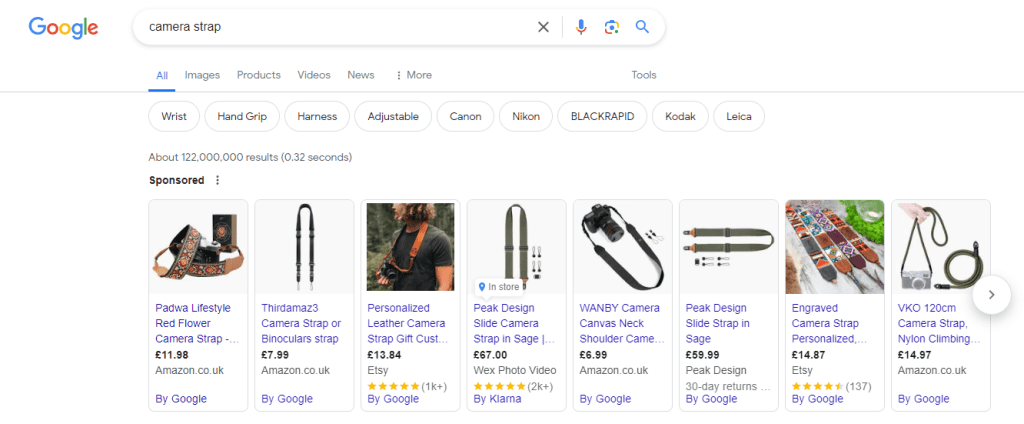
Alternatively, you can use article schema markup to provide search engines with in-depth information about an article’s content. For instance, it will display the featured image, publisher, title, author, and publish date in the search results, increasing the likelihood of a user clicking on the story.
Review schema is a great way to generate new business based on glowing online reviews. For instance, it will feature a star rating underneath your meta descriptionWebsite meta descriptions are used to inform web users on search engines about the content of webpages. and pros and cons to help users make an informed choice on whether to buy your product.

Other examples of schemata include local business markup, course markup, organization markup, software applications, job postings, and more.
Always choose the most relevant schema type for a webpage, such as “Products” for product pages or “Job Postings” for a vacancy.
Avoid spammy schema markup tactics at all costs, as it must match a page’s content to fairly rank your content in the search engines.
It is crucial to regularly update your schema data, especially if you have made big or small changes to its content. By doing so, you will ensure the schema complements the page’s content, providing users with relevant information that will encourage them to visit your website.
Google schema may receive periodical guideline updates you will need to monitor to remain compliant and rank higher in the search engines. Stay up to date on any changes to continually drive traffic back to your pages.
The terms “schema” and “structured data” might sound complex, but it couldn’t be easier to implement on a webpage. Yet, many sites make the mistake of overlooking the tactic, despite the fact it boosts traffic, click-through rates, and brand recognition.
The Google Structured Data Markup Helper Tool simplifies the process, as it can generate a code for your company, and you can quickly apply it to the <head> HTML section of a webpage. Implementing the code might feel a little tedious at the time, but you can guarantee it will be worth the effort once it starts driving significant traffic to your website.
At Click Intelligence, we can provide thorough technical SEO audits to fine-tune your website and improve its ranking in the search engines. Our talented team have the skills and experience to help your business stand out online, and we provide various services to match your wants and needs, such as on page SEO and SEO consultancy. Reach out to our friendly, knowledgeable team today to kickstart your strategy and develop a stronger presence online.

AI has become part of how people research and look for products, as well as…

If you’ve ever tested your website using Google PageSpeed Insights, you’ve probably been met with…

Digital marketing is a requirement for any business that wants to entice, engage, and excite customers online. When putting together…

Selecting an SEO agency is an important decision for any business. Check out our guide on how to choose an SEO agency successfully!

If Google's latest Web Core Vitals update has caused havoc to your SEO results, find your solution in our latest in-depth ebook.

The amount you invest in your link building budget should be based on the realistic…

Search engines aren't the only automated systems accessing, interpreting, and making sense of content found…

There's plenty of scope when creating SEO campaigns. Each industry that turns to experts for…

PR has long supported brands in building authority and spreading awareness, but PR distribution has…

Towards the end of September, on the 24th, Google released the second spam update in…

Some backlinks can help a key service page gain authority, while others help to strengthen…

SEO can be complicated. It’s constantly changing and is not a one-and-done job. That’s something…
AI has become part of how people research and look for products, as well as…
If you are looking to increase your traffic, sales & leads, let's have a chat!

The team will usually respond within 1 hour.