Combining GEO and PPC to Maximise SEO Visibility
Gone are the days when SEO visibility was all about rankings. AI search has changed…

Google Ads is undoubtedly one of the most powerful online marketing tactics available so long as you know how to harness its power effectively. This guide will detail how to optimise Google Ads, ensuring your budget is spent wisely towards maximising conversionA conversion is a desirable result on a website that leads to an action such as completing an order, filling out a form, or simply clicking on a link. numbers.
If you are a newcomer to Google Ads, let’s first clarify what this advertising platform is and what it offers marketers.
As you likely gather from the name, Google Ads is a platform provided by the ruler of the search engine land. If you want to promote your business via Google search results – and support (or bypass) the long-term effort required with SEO – this is the advertising network of choice.
With paid results, you can put your website content above organic results on the first page of Google. You don’t have to be a marketing expert to know that’s significant in attracting lots of potential customers.
Aside from search ads, the platform can also be used in other areas, such as YouTube ads, shopping ads, and display ads.
Keywords are the basis for Google Ads. When a search ad campaign is created, advertisers bid on the keywords – aka search terms – they want their content to show up in. If you have a business that sells hats, for example, you might decide to target “women’s hats for winter”.
In essence, the more popular the keywordKeywords are the words and phrases that potential customers might search for to find your business., the more an advertiser will have to pay. However, other factors come into play. These include industry, geographic location, and, importantly, in this case, advertising campaign quality.
Before learning how to optimise performance, you need to know how to get a Google Ad campaign up and running correctly.
First, your website needs to be connected to all relevant Google properties. That’s not just Google Ads – you also want to ensure it is connected with Google Merchant Center and Google Analytics. The former is important because it allows you to manage how products are displayed across Google, while the latter means you can track vital metrics that help to better refine marketing campaigns.
Regarding metrics, Google Ad conversion tracking is essential to set up for any campaign. Conversions are the aim of the game. You need to ensure your ads are not just getting impressions but are making people click, visit your site, and ultimately make a purchase.
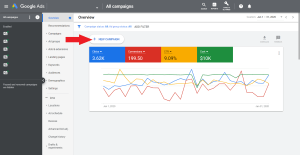
As for starting a campaign, this is as simple as logging into your Google Ads account and selecting the “Campaigns” option. You can pick your advertising objective and the campaign type you want to utilise.
Of course, this is only the foundation – there’s much more required to create an ad campaign that maximises results.
So, how do you go about devising a Google Ads campaign which effectively sells what you have to offer? Below are ten tips to help you increase Google ad conversions:
Your main focus will be on the ad itself. That’s understandable. However, you must remember to optimise your landing page.
You can have the finest ad around. You can generate a large collection of clicks from your target market. However, none of this advertising counts for anything if they don’t ultimately become a customer – the landing page is responsible for the bulk of this work.
As a result, you need to refine your landing page. It must incorporate the right keywords, compelling copy, visuals, etc., everything that will capture and maintain their attention until they press that ‘Buy’ button.
Keywords are the basis for Google Ads and how campaigns function. So naturally, one of the most important steps is to put in the necessary keyword research.
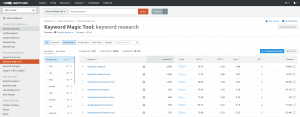
You can guess and have a general idea about which keywords to use. However, this is an area that demands research and the use of statistics. You want to avoid using the wrong keywords – for example, using broad, irrelevant, and high-volume keywords is a quick way to throw away your marketing budget.
Make sure to put in the research – there are numerous tools available to do so – and get a healthy collection of relevant keywords to target.
It’s true: your ads will generally be seen by more people when you focus on broad keyword terms. The problem is that your ads will end up being seen by the wrong audience. The result: you get fewer clicks, each click is more expensive, and they’re less likely to turn into conversions.
To avoid that triple whammy, you must stick with long-tail keywords. Fewer people are searching for these keywords, but you can focus on more relevant users, ones that will be more inclined to learn more about what you’re selling.
The great news with Google Ads is you can use negative keywords to your advantage. Now don’t get confused – this doesn’t mean they are incorporated into your campaigns. In fact, it is very much the opposite.
With the platform, you can tell Google the keywords you don’t want to be associated with your content. Excluding these from the equation allows you to better zone in on the market you want to target with your products and services.
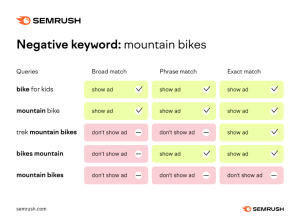
Google Ads provides users with four match-type options for keywords. These are:
As you would expect, each one delivers a certain level of relevancy and impressions. For instance, exact match will provide your ads to a much more relevant audience, but the trade-off is fewer impressions. It will also typically be more expensive than a broad match-type selection.
Opting for a fluid approach regarding the match types is recommended. After all, no marketing campaign should remain on a linear path. It needs to change and react to the data gained.
As an example, you might decide to start with a broad match type. After gaining a greater idea about the ads which are working best for your campaign, you can then zone in on these with phrase or exact matches.
Budgeting is a crucial area of using Google Ads. Of course, you want to try and maximise your ROI, but that may not be possible if you’re running campaigns to test or experiment with ad types and strategies.
To make the most of your budget, ensure the bulk of this is allocated to campaigns that are performing best – and helping you hit those all-important business goals.
An advert isn’t going to work if it lacks the right content. The good news is you’re supplied with plenty of space to produce eye-catching, engaging ads that will entice those clicks. The space is found with the following information fields:
You must make full use of all these information fields. The more detail you can add to your ads, the more effective they will ultimately be.
Even if you’re targeting a global market, focusing on specific geographic locations often makes sense.
If you receive a lot of interest in some locations over others, it makes sense to target these to maximise reach. Yet if you are also beginning to venture into new markets, these can also be part of your geotargeting efforts.
With geotargeting, you can also prevent a lot of your budget from being wasted in areas that have minimal interest in your offerings.
Not even a marketing expert can get an ad spot on for the first time. To get the most out of Google Ads, you have to test your ads, test them some more… and continue to test, test, test…
One proven method is to utilise A/B testing. This is where you run two ads for the same product, but each one differs with a change to the text, image, etc. If an ad receives more clicks than the other, this demonstrates a certain element is more valuable than its counterpart.
If you want to start your Google Ads campaign but would prefer to have some support, we are here to help. Get help from our Google Ads experts today and have campaign success.

Gone are the days when SEO visibility was all about rankings. AI search has changed…

There’s no denying that Google’s AI Overviews changed the face of search seemingly overnight. After…
There’s a good chance that you’ve already heard of PPC. As a marketing tool, PPC is invaluable, but there seems…

It's clear that a new management approach can do wonders for your company, and one of the most cutting-edge and…
Budgeting for SEO is a terrifying prospect. There are so many elements in play, and seemingly endless considerations, rendering it…

Google announced it was rolling out a further spam update on August 18, 2026. It…

Instead of scrolling through pages and pages of endless search results, more people are now…

When your target customer heads to Google to search for a product or service, or…

Artificial intelligence (AI) is changing the way that people are searching for information. Tools like…

For years, brands across industries have had one focus: getting higher Google rankings so their…

If you've ever tested your website using Google PageSpeed Insights, you've probably been met with…

On June 24, 2026, Google announced that it had started rolling out its latest spam…
As one of the top SEO agencies out there, our duties extend beyond creating SEO…
If you are looking to increase your traffic, sales & leads, let's have a chat!

The team will usually respond within 1 hour.