Facebook Ads vs Google Ads: Which should you be using?
TL;DR – Facebook Ads vs Google Ads: Which Should You Choose? Google Ads excel at…

Mark Zuckerberg renaming the organisation that oversees Facebook, WhatsApp and Instagram to Meta was perhaps the biggest digital marketing news from 2021.
The name change demonstrates a shift in focus for the brand, with it being stated that the new name better suits the company’s ethos and visions going forward.
That vision seems heavily invested in the Metaverse, a new, experimentally created social channel that relies heavily on Augmented Reality and VR technology to provide a unique experience for its users.
If the Metaverse takes off and becomes one of the core locations where people conduct their digital activity, then it undoubtedly has the potential to change digital marketing – which you can learn more about here.
However, digital marketers can’t begin to neglect the already established brands of Instagram, WhatsApp, and especially Meta’s most historically significant platform, Facebook.
These social channels see a lot of traffic, and many businesses and agencies use these channels to reach targeted customers and grow brands. For this reason, people in the marketing industry need to be aware of how the Meta revamp might change the way that marketing is done on these platforms.
One key aspect of digital marketing news that marketers should keep an eye on is how Meta and its Metaverse will impact Facebook ads.

Due to its high active user rate and how those users are usually very diverse, Facebook ads have been an essential tool for social media marketing. Facebook ads allow businesses to get their products seen and increase the reach of their brand, as an ad campaign will make your desired posts appear within more news feeds.
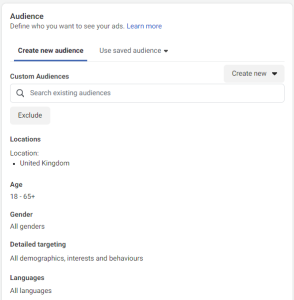
Facebook ads are really useful because the system allows businesses to target their ads to certain users based on their characteristics. With data obtained by Facebook, targeted Facebook ads can be tailored to only appear on feeds of users who match your target persona.
For example, if you sell vegan skate shoes, your Facebook ads can be configured to only target younger, more athletic users who demonstrate an interest in street culture and animal welfare.
Facebook ads do cost money, and there are multiple payment methods that businesses can choose from, with the most used one being Pay-Per-Click (PPC). This method means that you’re only charged for each click a link within your advert obtains. This is the chosen method for many marketers because you only pay when you get results.
 When going through a rebrand, it’s always best to do so while you have a positive reputation. For Meta, at the time of the rebrand, there was a fair bit of criticism towards the company as many felt that they were slacking on their privacy credentials. This was escalated more due to the fact that Mark Zuckerberg himself promised that their privacy policy would be tightened, something that was yet to happen before Meta rebranded.
This may be why, soon after Meta and the Metaverse was born, it was announced that Facebook would be limiting certain advertising options to no longer allow targeting based on a few sensitive parameters. This can make Facebook Advertising a bit trickier for some businesses.
First being implemented on the 19th January 2022, Facebook has removed some fairly popular targeting options. These are targeting based on:
Despite already being in place, if you previously ran an ad campaign using these targeting parameters, you will still be able to do so until late March 2022 – with a few caveats.
One such caveat is that if you decide to make changes to your advert from the ad set level before that date in March, then the audience changes will be triggered. You can only make campaign-level edits to avoid this, such as changes to your budget amounts.
Plus, if an ad set is paused before the March date, the new targeting changes will also kick in when those sets are reactivated.
Interestingly, it’s been stated that these changes will not fully propagate through the entire Metaverse ecosystem, with it just being Facebook that has made these changes. This suggests that these changes may not be indicative of a wider plan to make social adverting less targeted, but instead may have just been a ploy to boost the reputation of Facebook, as this was something that people were lobbying for.
Currently, on Instagram, there have been no changes to how their targeted ads work, which implies that this change is not one that is universal within the Meta brand. Although Meta has been working hard to give its services the perception of privacy, with WhatsApp pushing a sustainable marketing campaign to illuminate users of its encryption protocol.
With Facebook making these changes, others like Twitter and LinkedIn will likely follow suit. Meta has been under more scrutiny than others around this topic, but now as these changes have been made, attention may be now turned to these other brands.
How impactful these changes will be to your business will depend on your target audience and the product and service that you provide. As an example, the hypothetical vegan skate shoe company mentioned before will likely be able to continue to market to their audience by targeting based on demographics, interests, and behaviours. However, with veganism being a potential social cause, which has now been removed, they might struggle to reliably reach an audience that engages in this issue.
This change could also be an issue for LGBT-friendly businesses that offer bespoke products to this demographic. For example, a business that might sell gender-affirming items to transitioning individuals might not be able to target those people as effectively.
New alternatives will have to be implemented for businesses that might face difficulty on the platform due to these changes.
Meta has made these changes to their ad targeting because the options they’ve removed can be seen as potentially sensitive characteristics of an induvial. People can discriminate using these parameters, meaning that removing them can make Facebook a safer place.
Although for certain businesses that rely on individuals that would have fallen into these target categories, they will now have to find another way to reach these users on Facebook and potentially target a wider, less engaged audience to be able to reach the same people.
It’ll be interesting to see what other changes Meta and the Metaverse make to digital marketing, so it’s worth being up-to-date with the latest digital marketing news to ensure that your marketing efforts are as effective as they can be.

TL;DR – Facebook Ads vs Google Ads: Which Should You Choose? Google Ads excel at…
As part of International Social Media day, we have decided to throw in this extra…
Find out the secret code of how to get a rich snippet in Google.
The search engine landscape is constantly changing; search in 2022 is no exception. New trends and algorithm updates occur all the time in the search engine world.
Outreach emailing is a traditional marketing strategy that involves sending an email to someone with whom you have no previous…
The amount you invest in your link building budget should be based on the realistic…
Search engines aren't the only automated systems accessing, interpreting, and making sense of content found…
There's plenty of scope when creating SEO campaigns. Each industry that turns to experts for…
PR has long supported brands in building authority and spreading awareness, but PR distribution has…
Towards the end of September, on the 24th, Google released the second spam update in…

Some backlinks can help a key service page gain authority, while others help to strengthen…
SEO can be complicated. It’s constantly changing and is not a one-and-done job. That’s something…
AI has become part of how people research and look for products, as well as…
If you are looking to increase your traffic, sales & leads, let's have a chat!

The team will usually respond within 1 hour.