
Editorial Links: Why They Matter for AI SEO
When it comes to succeeding with modern SEO, there are many avenues to explore, but…

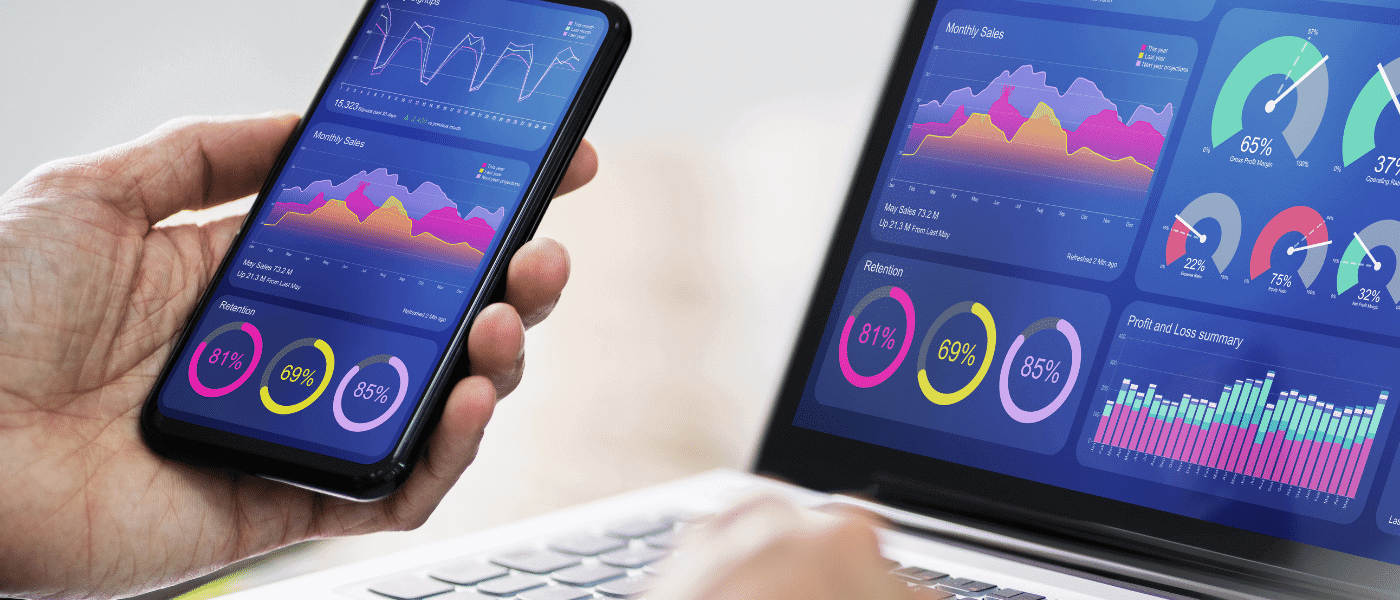
Key Performance Indicators are integral for any successful digital marketing campaign. If you fail to measure and keep constant track of these quantifiable goals, it’s difficult to understand the true impact of your efforts. The result: you struggle to know how strategies are progressing, how to set expectations, and make better use of your marketing budget and resources.
KPIs are important. That much is clear. However, you also need to know which ones to track and report on. That’s where this guide is here to help!
First of all, let’s set things straight and be clear on what actually are Key Performance Indicators. In essence, KPIs are measurable values that help keep track of digital marketing objectives. A specific KPI is zoned in on a certain objective or target, providing clear statistics that marketers can use to gauge and improve performance.
Digital marketing KPIs are wide ranging. They include everything from the number of views a webpage receives to the click-through rate for a Google Ads campaign. Due to the variety of KPIs out there, it can be tricky to figure out which ones are best to watch when running a digital marketing strategy. The last thing you want to do is try and pack your reports full of every statistic available, creating confusion in the process.
Why do KPIs matter? They supply a clear picture. They let marketing teams know if their campaigns are a success or failing to hit the mark. Without KPIs, you’re effectively trying to reach your business objectives while in the dark, without a torch, and not knowing where the end goal is.
When it comes to KPIs and the marketing channels they cover, there are 5 main categories. These are:
As far as the most important digital marketing metrics go, we have listed the top 25 KPIs to include in your reports. Simply put, no digital marketing strategy should be without these KPIs in place!
To make life that little bit more convenient, these KPIs are covered under the specific 5 categories mentioned above.
SEO is all about acquiring organic search traffic from platforms like Google, Bing, and Yahoo! As a result, it’s essential you track just how many people are visiting your website and specific webpages via these search engines.
By understanding your organic search numbers, this paints the picture of how successful your SEO efforts are currently. If certain pages are performing better than others, it can also give you the impetus to improve low-traffic pages with improved content, better keywordKeywords are the words and phrases that potential customers might search for to find your business. implementation, etc.
Just how much value is gained from your SEO and organic search traffic? One way of finding out is by tracking your organic search leads. This KPI allows you to see the percentage of visitors that don’t simply click on your webpage after a search engine query but those that become leads. This could be due to them sharing their email address, for instance.
Without tracking this KPI, it is difficult to understand how many leads are being generated due to organic search. It can also show you the need to focus on more targeted, closely related keywords that produce results – and attract people interested in your products and services.
Extending on from the previous KPI, you also need to see the number of conversions ultimately being made from organic search traffic. For example, you could be pulling in big numbers from high-ranking keywords. Yet if these keywords fail to align with your messaging – and consequently confuse the audience – it could see your product or service offer fall on deaf ears.
Backlinks are an essential ingredient of a successful SEO campaign. Due to this, it’s important to track the inbound links that are pointing back to your website. In theory, the more inbound links you have, the better the chances of your webpages scoring a high ranking with the search engines.
However, quality over quantity applies to backlinks. See if you are receiving inbound links from high-ranking, reputable platforms. If you have built a reputation as an industry expert or produced a peerless slice of content, your site links should appear organically in blog posts, reports, and news articles.
How relevant or important are your webpages in the eyes of Google? Finding out is possible by using Google PageRank. This KPI gives you insight into the algorithms used by the search king and the perceived value of each page on your site.
If the PageRank isn’t hitting the heights you expected, you understand more work – such as backlinks, fixing broken links, producing more engaging content, etc. – must be done to improve the situation.
The popularity of keywords can fluctuate over time. With this in mind, you need to keep a close eye on keyword trends. If you begin focusing on keywords that have dropped off a cliff in terms of relevancy, that’s not good news for your SEO campaign.
Aside from avoiding potential pitfalls, it also works at the other end of the scale. It can give you an insight into keywords that have suddenly grown in search volume, presenting the chance to craft content that focuses on these trending search terms.
Even if you’re utilising pay-per-click (PPC) adverts, simply receiving impressions isn’t enough. Admittedly, it’s not going to set you back any money as clicks aren’t being generated. Still, a lack of people entering your sales funnel is a worrying sign your ads are ineffective.
By comparing the click-through rate (CTR) against the number of impressions, you quickly learn about the impact – whether positive or negative – of your ads. If you’re not getting the results you expected, you can change up the design, ad copy, call-to-action prompt, etc. and measure to see if an improvement has been made with the CTR. This can be tested regularly until you unlock the perfect ad format.
When paying for each ad click, this can quickly build up and eat into your digital marketing budget. This is why it’s important to gain a strong idea about the effectiveness of your PPC ads. If these clicks are not turning into leads or sales, use this KPI to understand why your ads struggle to do anything beyond that initial action.
Whether it’s PPC ads like Google Ads or impression-based social media ads, this route is among the more expensive actions that can be made by a digital marketer. This is why it’s vital to keep a watchful eye over this KPI – otherwise, your entire ad budget could disappear without anything in return, aka acquisitions.
Measuring acquisitions needs to be done because your ads may be running at a loss – and that’s not suitable for anyone. See how many conversions are being made, check the cost per acquisition, and find out if you need to stop or adjust this side of your marketing efforts.
It’s one of the most obvious digital marketing metrics to track, yes, but that doesn’t make it any less important than the other KPIs on this list. You need to know the type of impact your social media content has in terms of views and impressions. Without tracking this KPI, you’ll be unclear about the true performance of your social media campaigns.
It’s true: many marketers don’t truly view social media as a place to generate leads. They mainly see it as a tool for building brand awareness. However, if you manage to harness the power of the likes of Twitter and Instagram, it’s possible to turn them into a valuable platform for acquiring targeted customers.
To see their effectiveness for leads and conversions, make sure to closely track how many prospects and customers come directly from your social media accounts.
Naturally, a bigger audience results in the potential for your social media content to be seen by more eyeballs. As you grow your follower numbers, it also demonstrates your Facebook posts, Tweets, and TikTok videos are hitting the mark and garnering the right attention.
It’s not just about having a massive audience. It is also vital to track the engagement your social media posts are receiving. This way, you can better understand what content receives impressions, likes, shares, etc. It also means you can see what type of posts work well, using this information to plan your future social media content.
You can use social media to find out how often your business is talked about. Whether positive or negative remarks, tracking comments relating to your business is helpful when evaluating your brand image.
This KPI’s importance is dependent on just how much you’re investing in your social media marketing. If you have a dedicated social media team and are splashing out on design and development costs, it’s imperative you know the ROI you’re getting from this marketing avenue.
By following website traffic numbers on a month-by-month basis, this supplies clarity in terms of visitor growth or decline. You shouldn’t just focus on overall site traffic, either. Make sure to include multiple specific page categories like homepage, blog, landing pages, and so on.
As a business owner, you’ll understand the importance of customer retention. This is why you must track the percentage of returning website visitors. It provides an insight into your audience, and how engaged it is with your content. For instance, if you’ve posted a blog post with a low return rate, this could indicate your content fails to entice people to continue returning for more.
This KPI goes hand-in-hand with SEO. The longer someone remains on your website, the better the chance Google will view this favourably and give your content a push up the search results rankings. It’s also important to track this so you know if your content is compelling and keeping people around.
Simply put, you can be generating thousands upon thousands of visits to a page, but this counts for nothing if it isn’t ultimately converting visitors into customers. By tracking this KPI, you can see which pages are performing and which should receive greater emphasis from your other marketing channels.
If your CTRs are not landing, your sales funnel can quickly collapse. By tracking this aspect, you can see which CTRs are attracting people’s attention and getting them to click for further information.
Whether it’s someone creating an account on your website or using their email to receive a free eBook, you must pay close attention to the new leads and prospects you generate on a monthly basis. This displays in plain view the overall performance of your marketing efforts.
The CPL details how much you had to spend when acquiring a new lead. By using this metric, you can evaluate your marketing efforts, see which channels are worth your investment, and whether your marketing activities are ultimately profitable.
How long is it taking for you to seal the deal? Time is money, and the quicker you can turn a lead into a paying customer, the better. This KPI allows you to track the average time of conversion, which is important in ensuring prospects remain within your sales funnel. If you take too long to convert, they could go to a competitor instead.
A high retention rate is always an ideal scenario in business. It demonstrates that customers are engaged with your business and its products or services and that they stick around to make repeat purchases or continue to use what you offer on a long-term basis.
On the opposite end of the scale, what if customers have stopped buying your products or subscribing to your services? This is where measuring the churn rate comes in handy. You can find out the percentage of customers that have disappeared over time, work out why this is the case, and act upon this to lower the churn rate.

When it comes to succeeding with modern SEO, there are many avenues to explore, but…

In 2026, digital PR services are essential for any brand wanting to build lasting authority…
Seasonality can have a huge effect on the success of your business. It is imperative to have a strong digital marketing campaign during periods of high consumer demand.

There’s a good chance that you’ve already heard of PPC. As a marketing tool, PPC is invaluable, but there seems…

The amount you invest in your link building budget should be based on the realistic…

Search engines aren't the only automated systems accessing, interpreting, and making sense of content found…

There's plenty of scope when creating SEO campaigns. Each industry that turns to experts for…

PR has long supported brands in building authority and spreading awareness, but PR distribution has…

Towards the end of September, on the 24th, Google released the second spam update in…

Some backlinks can help a key service page gain authority, while others help to strengthen…

SEO can be complicated. It’s constantly changing and is not a one-and-done job. That’s something…

AI has become part of how people research and look for products, as well as…
If you are looking to increase your traffic, sales & leads, let's have a chat!

The team will usually respond within 1 hour.