
Why Editorial Coverage Is Now Essential for Brand Authority
When your target customer heads to Google to search for a product or service, or…


The best SEO blogs are crafted with search engines and a target audience in mind. You must take the time to write insightful, well-written content if you want to rank highly in the search engine results pages (SERPs) and drive a flurry of organic trafficOrganic search traffic (sometimes called natural or unpaid search) is the traffic that's driven to a website because of unpaid placement on a search engine results page. to your site.
However, readers don’t want to decipher huge chunks of text. If you take anything away from our SEO blog tips, it’s that visitor behaviour can shape various metrics.
For instance, if a reader struggles to read and understand your content, it will impact your site’s dwell time and bounce rateBounce rate is the percentage of visitors to a website who visit only one page. A high bounce rate indicates that visitors are not satisfied with your website..
The metrics indicate to a search engine that the content is unhelpful, meaning your page is unlikely to appear at the top of the SERPs.
To keep visitors on the page, you must focus on creating visually appealing copy that provides answers to questions and even guides them to other helpful pages.
This blog post SEO checklist will ensure you write high-quality, aesthetically pleasing, clear copy time and again. Are you ready to get started? Here are 10 steps to structure your blog post.
Before you start typing, you must think of a compelling topic your target audience would want to read.
A clear subject will help you adopt the correct tone of voice and encourage users to click on the blog.
For instance, the copy should provide an answer to your demographic’s questions, offer a solution to their problem, or include thought-provoking opinions or ideas that boost your brand’s trust and credibility.
Select a topic you are knowledgeable and passionate about, as your interest and understanding will shine through in the piece.

A great headline is essential when blog writing. When producing SEO blogs, you must craft a punchy title that will grab people’s attention and encourage them to read the content.
Of course, your article will perform much better online if optimised for the search engines.
For this reason, you’ll need to perform keyword researchKeyword research helps websites unearth the best keywords to drive traffic and visibility. This research is supported by a number of powerful web-based tools, the best of which we’ve listed here. to incorporate powerful keywords into your blog title, introduction, body, and metadataPut simply, metadata is data that describes data. It’s a labelling system designed to help machines and humans understand what is contained within a packet of data..
To do so, pop a potential blog topic in a keywordKeywords are the words and phrases that potential customers might search for to find your business. research tool, such as Ahrefs or Semrush.

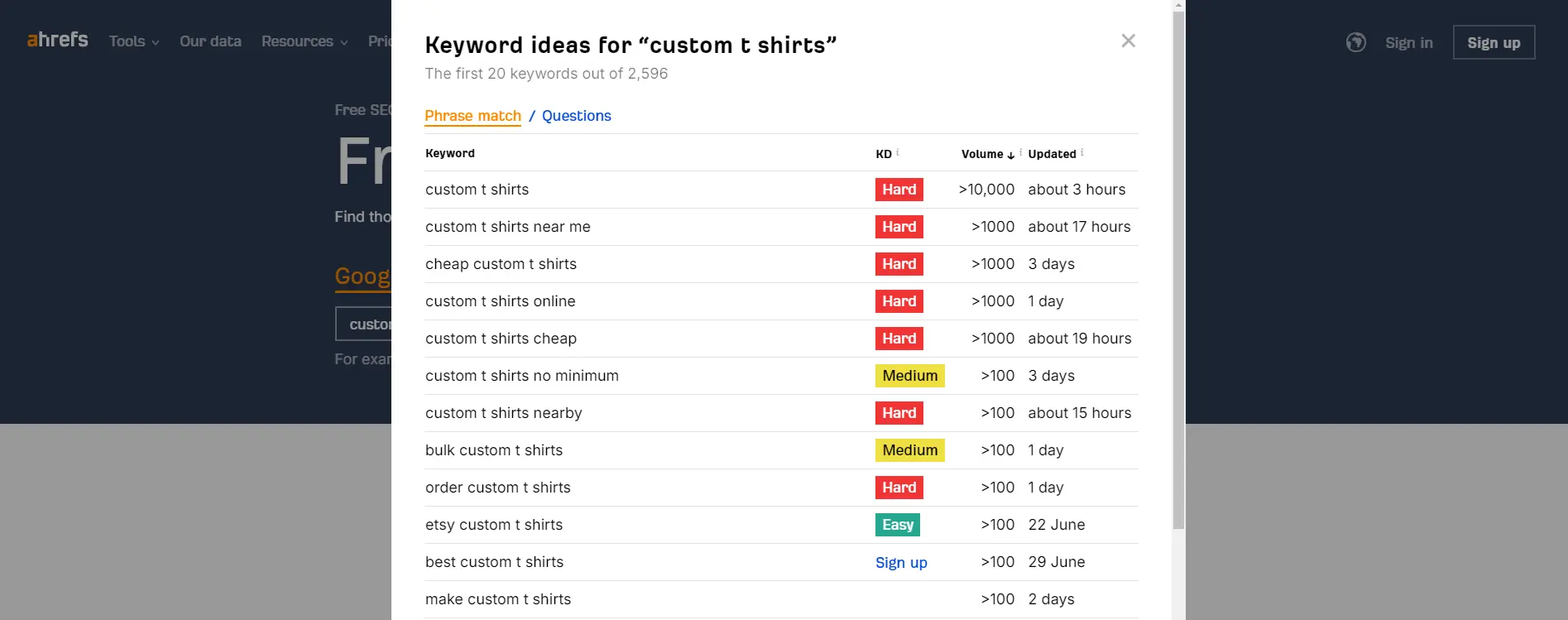
Next, review the exact match results’ search volume and keyword difficulty. If they are too high, consider keyword variations or related options.
Once you have selected your keywords, you must naturally incorporate them into your blog headline and copy.
It doesn’t matter if you’re writing a blog, web copy, or product descriptions; your content should be scannable to earn and maintain engagement.
It makes it easier for an audience to read and process the content, resulting in a better user experience and improved engagement metrics.
Start by prioritising the blog’s key points and then structure it with:
Once you have nailed down the blog’s topic, headline, and outline, it’s time to start writing.
The introduction is the most important part of your content, as it sets the tone for the rest of the blog.
Aim to keep your intro short but sweet. You risk losing a reader if it exceeds 200 words.
When it comes to SEO blog best practices, we recommend addressing a reader’s common problem, empathising with the issue, and promising a handy solution that you’ll include in the body.
As mentioned earlier, subheadings are essential for creating an attractive blog layout, and you’d be foolish to leave them out.
Use a mix of H2 and H3 subheadings in your blog, as it helps visitors scan the text quickly to find the information they’re looking for in the content.
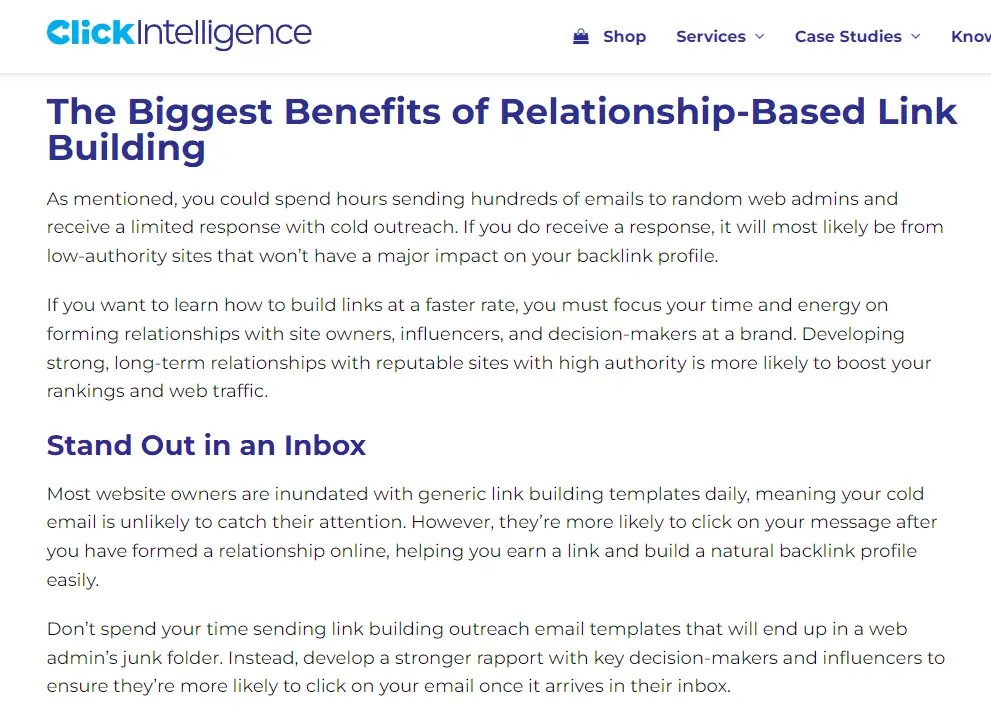
Also, it will break up large chunks of text, helping you maintain a reader’s attention and encouraging them to read the copy from start to finish.
As we’re content writing experts, you can trust us when we say that subheadings are essential for SEO, as they can increase a blog’s shares, traffic, and backlinks.
Long paragraphs can appear time-consuming and mundane to readers, which is why you should attempt to break up large chunks of text.
Stick to short and clear paragraphs, which should include no more than two to three sentences.
Also, you are free to vary the paragraph length to maintain interest in the copy. For example, play with the number of sentences per paragraph to create a more visually appealing layout.
Add depth to your article by referencing original studies or incorporating statistics to improve your blog post’s credibility.
Back up your points as much as possible to improve trust and use internal linking to support your content.
Also, you could provide a backlink to other thought leaders who have shared an opinion on your topic. However, avoid linking to your competitors.
As you write your SEO blogs, look for opportunities to naturally incorporate links into the content.
There are two types of links you can include:
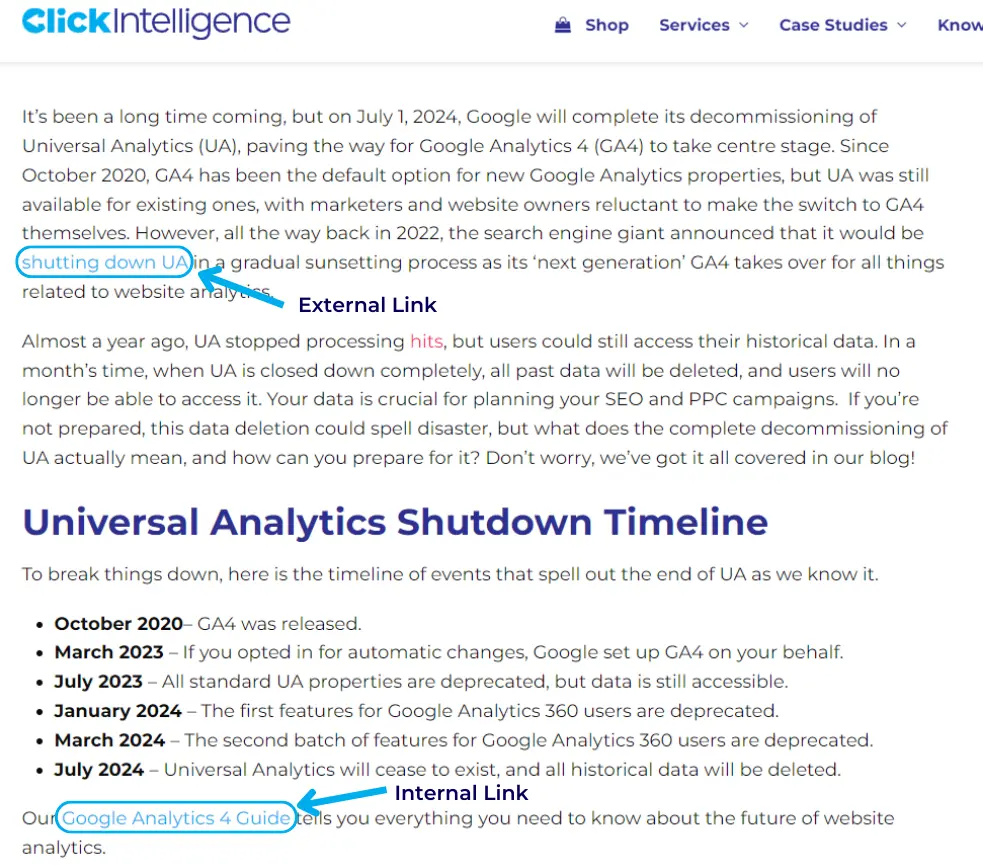
Internal links will prove to a search engine how your website is structured and provide a connection between topics and pages.
Internal links pass “link juice” to other pages, helping them rank higher in the SERPs. Also, it will guide readers to helpful content or resources, encouraging them to remain on your site for longer.
External linking to high-authority sites shouldn’t be disregarded, either, as it will improve a blog’s credibility and provide readers with extra value.
Once you have written the blog, incorporate visual aids where appropriate, as it will keep readers entertained and engaged. It will break up a large amount of text, encouraging visitors to read on.
However, avoid using images for the sake of it, and include visuals that support the content, as it will provide your readers with more value.
A conclusion will wrap up the blog post. It should summarise the most important points in the piece, helping a reader to absorb the information before they click away.
Keep the conclusion brief yet interesting and use it to tie up any loose ends. It’s a gentle way to end the blog and is much better than a sudden stop.
A strong blog structure will increase the likelihood of a reader clicking on your article, reading its content, and exploring your website.
Plus, your target audience will be more likely to bookmark the content, share it with their loved ones, or perform a desired action, such as purchasing a product or service.
Now you know how to write an SEO-optimised blog post, there’s no time like the present to get started. Alternatively, book a free content writing consultation at Click Intelligence to learn how we can craft engaging copy for your company that packs a punch.

When your target customer heads to Google to search for a product or service, or…

Content writing vs copywriting. It’s a debate that often confuses marketers. However, don’t underestimate knowing…

Expertise. Authoritativeness. Trust. These are the three core pillars behind Google’s E-A-T concept. If you have been in the content…

We’re going to take a look at how you can turn your eCommerce dream into a reality.

If Google's latest Core Web Vitals update has caused havoc to your SEO results, find your solution in our latest in-depth eBook.

The amount you invest in your link building budget should be based on the realistic…

Search engines aren't the only automated systems accessing, interpreting, and making sense of content found…

There's plenty of scope when creating SEO campaigns. Each industry that turns to experts for…

PR has long supported brands in building authority and spreading awareness, but PR distribution has…

Towards the end of September, on the 24th, Google released the second spam update in…

Some backlinks can help a key service page gain authority, while others help to strengthen…

SEO can be complicated. It’s constantly changing and is not a one-and-done job. That’s something…

AI has become part of how people research and look for products, as well as…
If you are looking to increase your traffic, sales & leads, let's have a chat!

The team will usually respond within 1 hour.