
How Can Brands Compete in ChatGPT Without Paying for Ads?
AI has become part of how people research and look for products, as well as…


Everyone thinks that they have a firm handle on exactly what SEO means. There are numerous stereotypes when it comes to basic SEO strategy, and the most common mistakes are those that fail to understand the nuances of those stereotypes. Among the buzzwords and compounded errors, it can be all too easy to create an SEO strategy that is poorly structured, unrealised, and potentially damaging. Learning to spot the stereotypes and knowing what they actually entail, rather than what people assume they mean, could be the difference between a successful SEO strategy and one that damages your search engine rankings. If you’re confused by some of the advice given on the many SEO instructional articles that are prolific, then here are the seven most common elements of a successful SEO campaign, and how to achieve them without falling victim to the stereotypes.

It’s a common misconception that social media directly contributes to your SEO. The common view is that the more likes that you get, the more value a search will place on your content and website. This is an all too common misunderstanding of how SEO and social media can work together. The stereotype does have a foundation in fact, and your social media strategy is tied in very closely with your SEO. Google does not differentiate between social signals (likes and comments), but it does treat social media pages in the same way that it treats every website. Due to the fact that social media works on a 24/7 basis, it would be very difficult for search engines to keep up with the ever-changing influence of a social media campaign, but they do take into account your linksHyperlinks, also known as links, are the connection points on a webpage that take you to other webpages.. So, as well as improving the reach of your brand through social media sharing, you are also creating a more indirect route to a better search engine ranking through improved trust ratings.
Everyone with even the most basic awareness of SEO will have heard of keywords, and there is no excuse not to be using them. The misconception is that the best way to use your keywords is to stuff your content full of the relevant ones and hope for the best. It is an all too common error and is based on the stereotype of just how Google works. Using keywords effectively does not need to be a challenge. Identifying the best keywords and then using one or two on each of your website pages is an effective route to better online visibility through improved search engine rankings. Remember to use long-tail keywords, and consider looking at synonyms when you’re doing your initial keywordKeywords are the words and phrases that potential customers might search for to find your business. research.
Keyword research is essential, and the method of overstuffing your content and website with relevant keywords can actually damage your SEO plan.
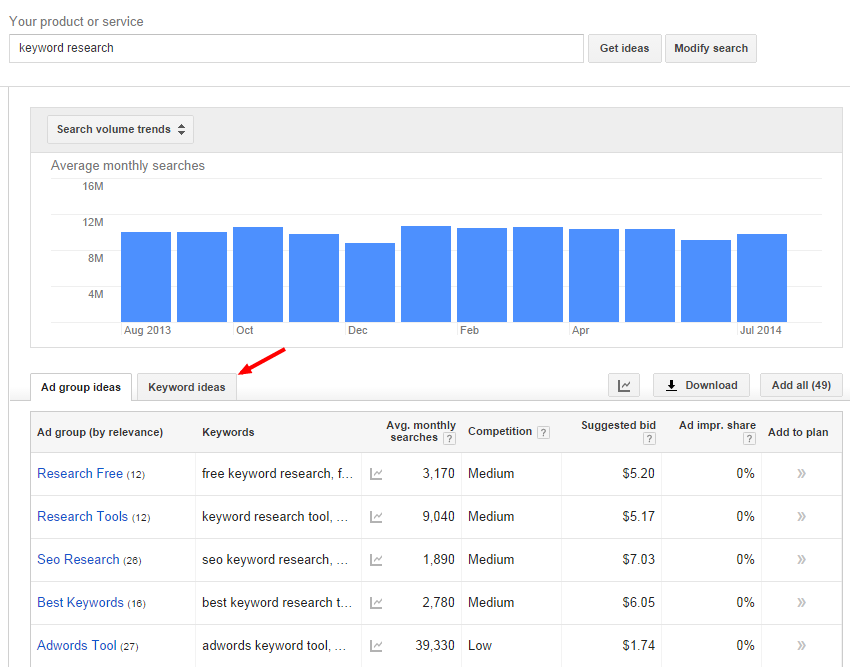
The best SEO strategies have a firm focus on organic growth, although it’s very easy to find a variety of conflicting information on how to achieve this. The worst response is to look at slow changes to your SEO performance and call it a part of the organic process. Organic optimisation is very useful, and of course, it is a much cheaper alternative to paid results. The key things to remember about organic growth strategies is that they need to be keyword driven, and the content itself needs to be of very high quality. How you market your brand will be the deciding factor when it comes to organic growth, so don’t assume that slow and incremental improvements are the best result. It’s just as possible to get rapid results using organic methods, but you will need to put the work into the keyword research and the creation of authoritative content.
Google wants to give users the best results possible, and one of the ways that they do this is by looking at the number of online links that direct to a specific page. It also judges the quality of those links, and it will consider both internal and external links in the same manner. A high-quality link will be one that comes from a page that is relevant to the landing page, so there needs to be some form of shared subject matter. The page that you are being linked from will also be judged on its own quality as well, so make sure that you are not simply adding links to your site randomly with a scattergun approach. It’s all about finding the right balance between quantity and quality. One without the other is not going to help and is one of the main stereotypes for inexperienced SEO strategists to fall for. Never automate your link building, and pay close attention to both quality and detail, and you will have a much better foundation for establishing authority and trust in your web pages.
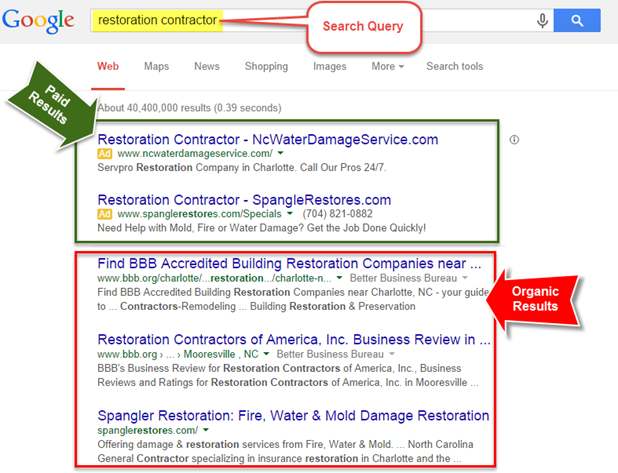
Although they work in different ways, both SEO and Pay Per Click advertising can work extremely well together. A common misconception is that the two methods are so fundamentally different than they should always be considered separate strategies. This is one of the more consistent stereotypes to overcome. It’s a fact that search engine users are more likely to click on the first result of a query if the first result is not a paid advert. By working with both SEO and paid advertising together, you maximise your exposure and further improve the authority that is so important when it comes to overall search engine results.
Another stereotype is that once you have a good presence in a relevant search query, your SEO job is done. It’s a basic mistake that is all too common to see. The truth is that your web pages also need to be optimised, and this can be a lot of work. It will mean optimising your page and image descriptions with a number of specific necessities, such as:
For smaller businesses, page optimisation can be a relatively easy task, but it can be very influential when it comes to being more easily understood by search engines, and will go a long way to boosting your SEO performance.
There remains this prevailing stereotype that by stuffing your content with keywords, you will naturally start to perform better on search engine rankings. While this may have been true a decade ago, Google, Bing, and Yahoo have transformed the way that keywords are assessed, and they will actually lower your value if they register keyword stuffingKeyword stuffing is a technique that attempts to give pages higher rankings in search engine result pages by inserting the same keywords over and over again.. Instead, the focus is on ‘rich content,’ which will mean that your content strategy may well need a refresh. Rather than focusing on keywords, you should instead be looking at topic modelling, and providing the best quality content that you can. Whether that’s in the form of blog posts, a video series, or the best infographics, will depend on your website and branding. Creating quality content that people are looking for will be much more productive and effective when it comes to SEO rankings and should be a focus for your marketing team. While using backlinks and keywords is a necessity, having thin content will mean that users will not remain on your site for long, and your bounce rateBounce rate is the percentage of visitors to a website who visit only one page. A high bounce rate indicates that visitors are not satisfied with your website. will reflect badly on search engines. As a result, you will start to appear lower and lower on the page until you are relegated to the wasteland that is Page 2 of a Google search.
As you become more used to the parameters of SEO marketing, you will start to recognise instances where websites have believed the stereotypes and failed to do their deeper research. This failing will have a negative effect on their online visibility, and if you want to avoid the same mistakes it’s essential that you don’t fall for the same errors. For a better SEO campaign, work out the difference between the facts and the fictions, and your website and brand will be much more successful.

AI has become part of how people research and look for products, as well as…

If you’ve ever tested your website using Google PageSpeed Insights, you’ve probably been met with…

Are you struggling to think about what to write about for your content marketing efforts? It’s not an uncommon situation–particularly…
Link Building or Managed SEO which is right for me?

Here is how to find the perfect link building partner, download today!

The amount you invest in your link building budget should be based on the realistic…

Search engines aren't the only automated systems accessing, interpreting, and making sense of content found…

There's plenty of scope when creating SEO campaigns. Each industry that turns to experts for…

PR has long supported brands in building authority and spreading awareness, but PR distribution has…

Towards the end of September, on the 24th, Google released the second spam update in…

Some backlinks can help a key service page gain authority, while others help to strengthen…

SEO can be complicated. It’s constantly changing and is not a one-and-done job. That’s something…
AI has become part of how people research and look for products, as well as…
If you are looking to increase your traffic, sales & leads, let's have a chat!

The team will usually respond within 1 hour.