
How Can Brands Compete in ChatGPT Without Paying for Ads?
AI has become part of how people research and look for products, as well as…


Keywords. If you run a website or are in digital marketing, you will have definitely heard of them. After all, they’re the bread and butter of SEO. Keywords can help you understand what users are searching for on the internet and the type of content you should be creating to connect with your target audience. Optimising your content with the right keywords can give you a rankings boost, but how do you know which keywords to target? It all starts with keyword researchKeyword research helps websites unearth the best keywords to drive traffic and visibility. This research is supported by a number of powerful web-based tools, the best of which we’ve listed here.. There’s one special tool that can help simplify this process: the Semrush keywordKeywords are the words and phrases that potential customers might search for to find your business. research tool.
The platform has almost half a million active users and a database of a whopping 25 billion keywords that content marketers everywhere can use to get one step ahead of the competition and climb the SERPs. In this blog, we spill the beans on the importance of keyword research and how to use Semrush to find keywords in order to boost your visibility, reach, and capture more organic trafficOrganic search traffic (sometimes called natural or unpaid search) is the traffic that's driven to a website because of unpaid placement on a search engine results page..
The terms people enter into search engines to find information are called keywords. Keyword research is exactly what it sounds like. It’s the act of investigating – via the Semrush keyword research tool – which keywords you should be targeting through your website content to rank higher in the SERPs and attract relevant traffic your way. Being clued up about keywords can also help you understand where your users are coming from and what they want to achieve from their searches. All of this can provide inspiration for new content, grow brand awareness, and boost those all-important sales.
Doing keyword research in Semrush isn’t a one-and-done job. To ensure your website content is fully optimised and you’re targeting the right keywords with the right type of content that fulfills search intent, you should ideally be carrying out keyword research regularly. Here’s why:
Before we get into the nitty-gritty of using Semrush for keyword research, it’s important to know what makes a keyword worth targeting to make the biggest impact on your rankings. There are 4 metrics to look at using the Semrush keyword tool to determine if your keyword is worth going for.
Not every keyword is created equal, and looking at these key metrics can help you make smart decisions when it comes to your own SEO strategy. It isn’t effective targeting only high-difficulty keywords. Instead, you should ideally be looking at terms with low difficulty and high search volume. If they are on an upwards trend, even better!
Understanding the above metrics makes Semrush keyword research much easier. Below, we’ve listed 3 straightforward ways to approach this crucial SEO element.
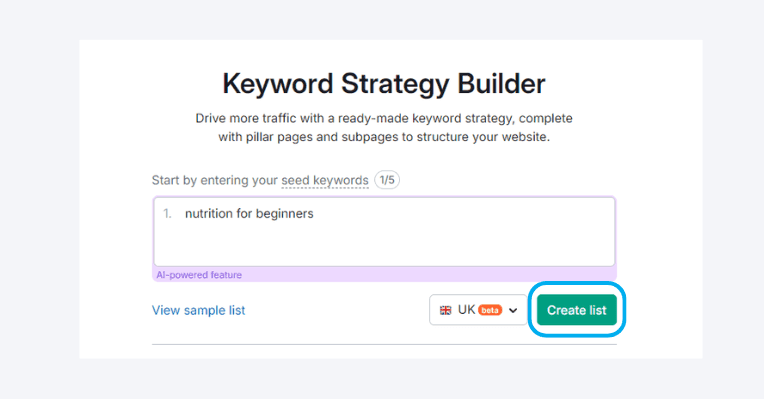
Not sure where to start? Semrush can help you build a keyword list based on some obvious keyword terms related to your industry that you have thought up. These are known as ‘seed keywords,’ and you can enter them into the Semrush keyword search bar and then see a list of related, relevant terms that you could target. Remember to take into account the 4 important metrics.
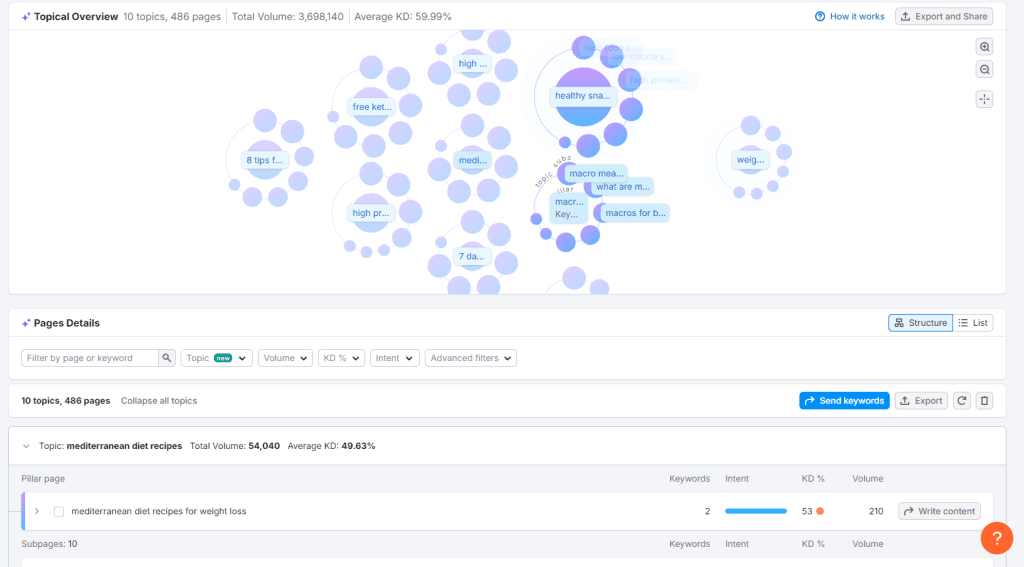
Add the terms you like to your Semrush Keyword Strategy Builder to refer back to. What’s better is that the Keyword Strategy Builder will group your keywords together into similar topics, which can help save you time and see where you should be creating new content.
Obviously, you want to outrank your competitors. To do this, you will need to take a look at the keywords they are ranking for. You can do this by searching for a relevant seed term in Google and then taking your competitor’s URL and pasting it into Semrush’s organic research tab. Select ‘View All Organic Keywords,’ and it will bring up a list of keywords you should be aiming for.
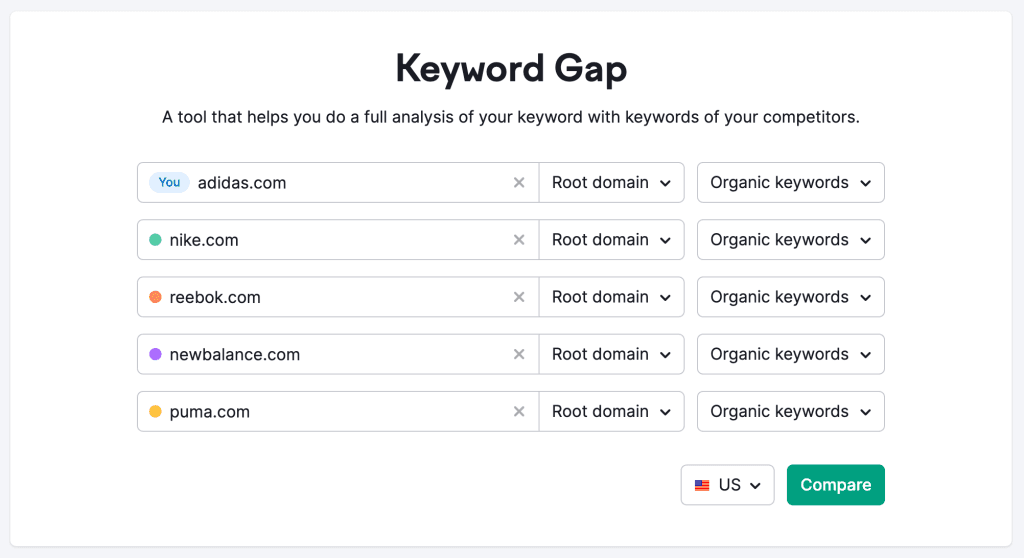
The Semrush keyword gap tool can also help you pinpoint fresh keywords that you do not rank for but your rivals do. Simply enter your URL alongside your competitors, and voila!
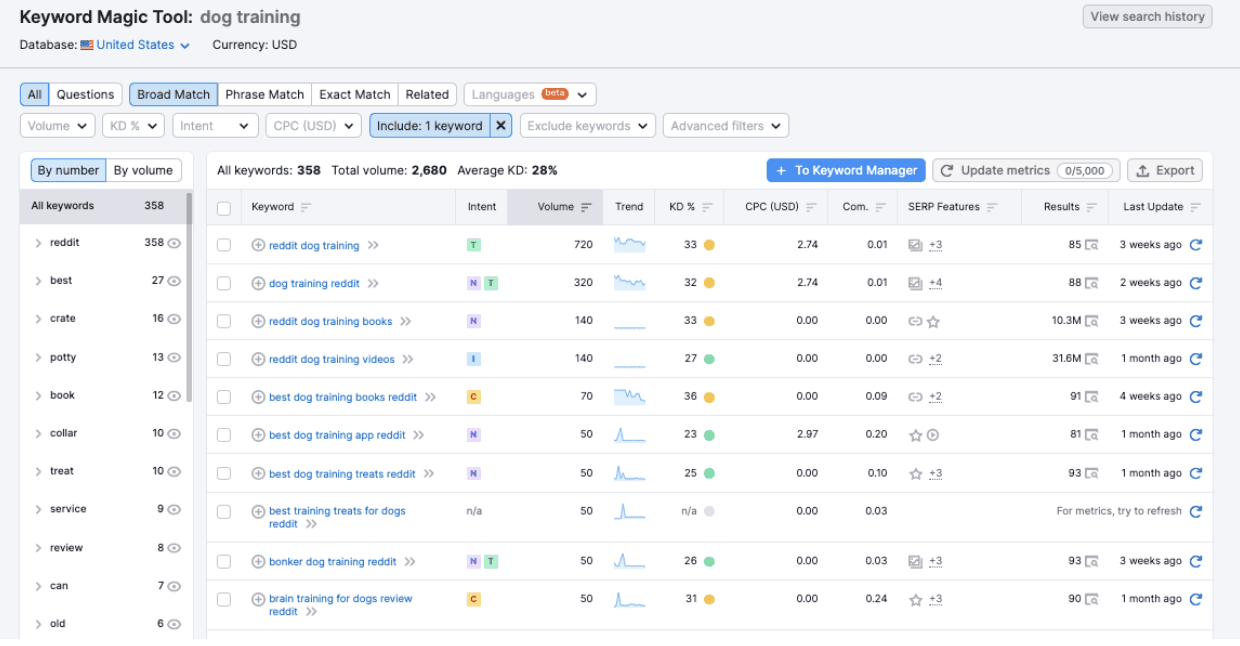
If you want to do some in-depth Semrush keyword analysis, then you need to make the most of the Keyword Magic Tool. The Keyword Magic Tool in Semrush can transform your SEO strategy as it takes your seed keywords and gives you related long-tail keywords and phrases that are easier to target and rank for. What’s even more helpful is that the tool breaks the keywords down into topics so you can easily plan your content around them.
This is helpful because seed keywords are often highly competitive as they are so broad, and lots of people search for them. Semrush makes it easy for you to narrow down your results with the following filters: Broad Match, Exact Match, Related Phrases, or Phrase Match. All of the important metrics will also be displayed, which can help you decide which terms to concentrate on.
Keyword research might seem daunting at first, but Semrush’s keyword tool really does help to take the confusion out of it all. By understanding the importance of relevant metrics and changing search engine and industry trends, you can use the three methods explained here to take your content strategy up a level. If you’d rather leave it to the experts, our extensive SEO services are here to help.

AI has become part of how people research and look for products, as well as…

If you’ve ever tested your website using Google PageSpeed Insights, you’ve probably been met with…

What is Content Marketing? Download Our How-To Guide Today!

Expertise. Authoritativeness. Trust. These are the three core pillars behind Google’s E-A-T concept. If you have been in the content…

We’re going to take a look at how you can turn your eCommerce dream into a reality.

The amount you invest in your link building budget should be based on the realistic…

Search engines aren't the only automated systems accessing, interpreting, and making sense of content found…

There's plenty of scope when creating SEO campaigns. Each industry that turns to experts for…

PR has long supported brands in building authority and spreading awareness, but PR distribution has…

Towards the end of September, on the 24th, Google released the second spam update in…

Some backlinks can help a key service page gain authority, while others help to strengthen…

SEO can be complicated. It’s constantly changing and is not a one-and-done job. That’s something…
AI has become part of how people research and look for products, as well as…
If you are looking to increase your traffic, sales & leads, let's have a chat!

The team will usually respond within 1 hour.

Comments (1)