
How to Rank in AI Search as a Small Business
Just when you think you’ve got SEO for small businesses figured out, along comes the…


Local SEOLocal SEO is the process of optimizing your website to rank on the 1st page of Google for a search term and geographic location that is relevant to your business. is a useful marketing strategy for businesses with a physical location. It can make you more discoverable by local customers and generate leads from users who might be interested in using your services. However, the issue with local SEO is that it can be a bit of a tricky tactic to implement.
Thankfully, we have created a cheat sheet that leaves no stone unturned to guide you through the process. With this resource, you should be comfortable with all aspects of local SEO, which in turn can help your business outperform your competitors in local ranking.
Still not sure if our Local SEO Cheat Sheet can help you?
Within our comprehensive Cheat Sheet, you will discover how to set up a Google My Business listing and use it to manage your online reputation better. It will also give you tips on how to write compelling local content, which you can use to earn high-quality linksHyperlinks, also known as links, are the connection points on a webpage that take you to other webpages. to your website and attract new local customers. This guide will also help you utilise hyperlocal marketing, identify your competitors so that you can outperform them, avoid local ranking issues, plus so much more.
Have you been struggling with local SEO? If yes, then our Local SEO Cheat Sheet is just the digital marketing tool that you have been waiting for!
Whether you are carrying out Local SEO for your own business or on behalf of a client, before you get started, you need to make sure you have all the required location information to hand. All this information will aid your local marketing in some way, shape, or form, so it’s important that you have an understanding of:
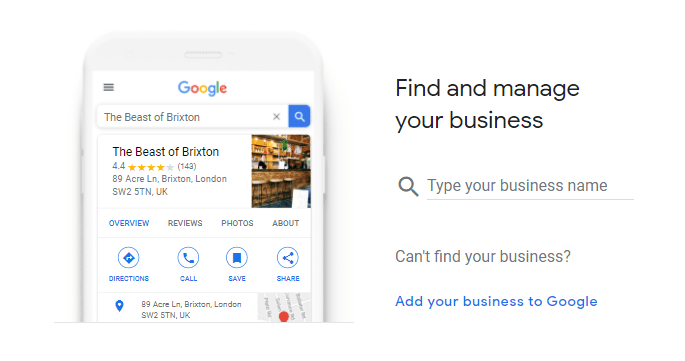
If you do not yet have a Google My Business listing, this should be one of your main priorities as a local business. However, it’s important to remember that not every business will be eligible or even benefit from a Google My Business listing. As a basic rule of thumb, if you’re an online-only business, then there will be no need for a Google My Business listing as you have no singular geographical location. For a more in-depth look, you are eligible for a Google My Business Listing if:
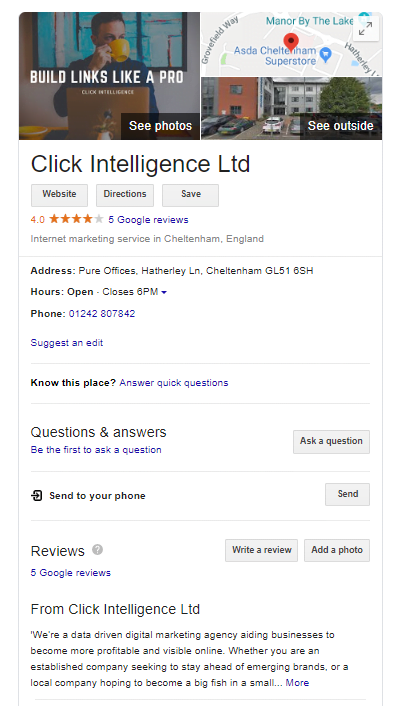 How to set up a Google My Business Listing
 Setting up a Google My Business isn’t that difficult of a process and can be completed in a fairly short space of time. To get started, you first need to set up a Google Account, and once that is complete, you then need to head to the google.com/business tab. This is where you begin setting up your account, and you’ll be prompted to enter your business name, address, and category of your business. There is a select number of categories, so be sure to go with the one that best describes your business.
After this, you need to add your basic contact details, such as a contact number and then a website URL, as you won’t be able to verify your Google My Business listing without it.
Once verified, you can then optimise your listing further with photos of your business premises and products, videos, offers, Q&As, and more!
Google My Business isn’t the only thing that can boost your local SEO, as your website and the features you’ve added to it will play a big part as well. To make your website optimised for local searches, you should make sure to include all the below information:
Creating compelling content is crucial for all businesses, enabling you to attract new customers and engage with existing ones. To create content for your local business, you need to build a strong local brand image by generating content tailored to your local audiences. If you haven’t got the time to create your own content, you can build a following by allowing guest blogs on your website. You should also be targeting local trends and hashtags so that your content is focused and targeted to your business location. You can also go one step further with this and link your content to local offline events and activities.
As a local business, your reputation within the community is crucial, so you need to manage your reputation online.
To ensure you have a positive local reputation, you will need an active review acquisition program where you can monitor these online reviews and quickly respond to these reviews, especially if they’re negative, as you’ll want to resolve any issues as quickly as possible.
Furthermore, you will also need to create an in-store strategy to deal with offline customer complaints, as this will create a customer-centric attitude that will help reputation. You should also train staff in dealing with complaints and instil a code of conduct for staff to follow so that they operate professionally and helpfully.
If you are not ranking as high as you would like on local searches, then it can be a good idea to try and find out why. Some of the most common issues that may be affecting your ability to rank locally include:
Try to identify what could be stopping you from ranking, and then address it quickly so that your rankings don’t suffer for too long.
To spread the word about your local business, you should write local press releases that local journalists, bloggers, and editors can pick up.
If you are not sure what to write about, some common things include talking about your unique selling point or brand story, illuminating your employees and their achievements, or providing more insight into your products and services – especially if you’re offering something new. It’s also a good idea to write about any involvement with local events, charities, or other businesses, as these can also be a good thing to focus on. Plus, in a world where the consumers are getting more eco-conscious, you could also write about your green credentials.
To improve trust, build credibility and increase authority in your local business, you should aim to win links or citationsA citation is a mention of your company, product, or service in an online publication. Citations increase the ranking of your site on search engines. These are links to your local business from platforms such as online news sites and blogs.
You can win links and citations via the following sources:
Suppose you want to target customers in a highly specific, geographically restricted area, such as searchers who are Googling “near me” searches on their mobile devices. In that case, you need a hyperlocal marketing campaign.
Ways in which you can rank well for hyperlocal search results include:
Local competition can be equally as fierce as national and international competition, depending on your niche and your geographical location. Therefore, you need to make sure you are monitoring and analysing your competitors. Be sure to carry out a manual competitive audit or use audit software to determine your main local competitors. Once you’ve done that, conduct local keyword researchKeyword research helps websites unearth the best keywords to drive traffic and visibility. This research is supported by a number of powerful web-based tools, the best of which we’ve listed here., including local keywordKeywords are the words and phrases that potential customers might search for to find your business. volume, and identify where you rank amongst your competitors for each keyword. With this, you can determine why you might be getting outranked and then learn from your competitor’s tactics.
Local SEO is a super powerful marketing tool for businesses with a geographical location. Using this cheat sheet, you should be able to deploy some of the best local SEO tactics in the most effective way, which can boost your business’s performance. Refer to this list to make sure that you don’t miss out on anything vital when building your local SEO campaign.

Just when you think you’ve got SEO for small businesses figured out, along comes the…

Citations are a long-standing SEO trust signal that helps increase visibility in local search results…

Download our free Millionaires SEO Guide Today!

Without the correct tactics, your website doesn’t have a chance of appearing prominently on search engine results pages. Because if…

Selecting an SEO agency is an important decision for any business. Check out our guide on how to choose an SEO agency successfully!

The amount you invest in your link building budget should be based on the realistic…

Search engines aren't the only automated systems accessing, interpreting, and making sense of content found…

There's plenty of scope when creating SEO campaigns. Each industry that turns to experts for…

PR has long supported brands in building authority and spreading awareness, but PR distribution has…

Towards the end of September, on the 24th, Google released the second spam update in…

Some backlinks can help a key service page gain authority, while others help to strengthen…

SEO can be complicated. It’s constantly changing and is not a one-and-done job. That’s something…

AI has become part of how people research and look for products, as well as…
If you are looking to increase your traffic, sales & leads, let's have a chat!

The team will usually respond within 1 hour.