
How to Get LLMs to Mention Your Brand
Simply appearing on a search page isn’t enough anymore, not in today’s world driven by…


Link buildingLink building is a process of acquiring links pointing to your website. These links are obtained by creating content, participating in social media or commenting on other blogs. is the term that’s most associated with SEO, (Search Engine Optimisation). Moz.com describes this perfectly as “the process of acquiring hyperlinks from other websites to your own.” As easy as this might sound, there are right and wrong ways of doing this.
Google Panda’s link building algorithm uncovered many short-cuts but ultimately unsatisfactory ways of pushing sites up the ranks in engine searches. Since then, the rules have changed, and so there are some things to bear in mind if you’re planning on working on your link building skills this year.
Google has more than 200 ranking signals in their algorithm for scoring websites in the search engine. Link building, provided you use the correct keywords, will show Google and page visitors that you are a trusted and reliable site.
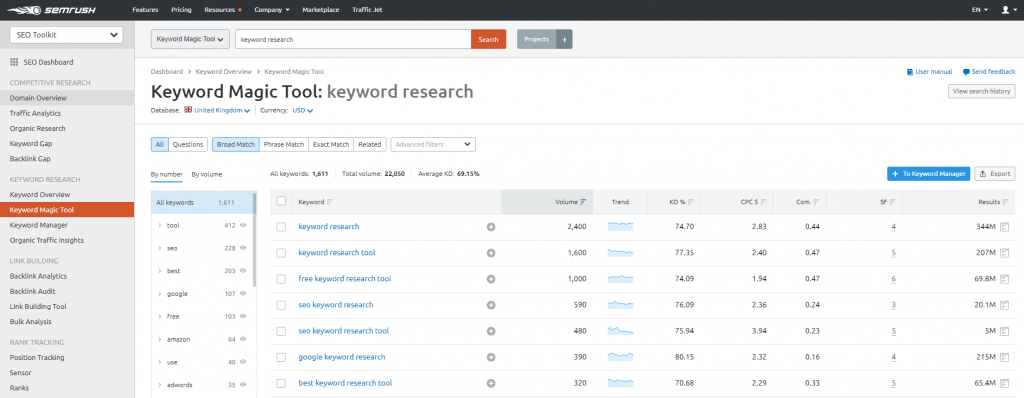
What industry do you currently work in? What are people searching for within that industry?
Doing some extra investigating into your industry can’t hurt, particularly when you’re trying to boost your ranking online. Hunting down the most frequently used keywords surrounding your sector, particularly those used by your competitors is far better than just using a keywordKeywords are the words and phrases that potential customers might search for to find your business. you hope might be useful. Getting to know your industry inside-out ensures a link building strategy that works for your website.
 Avoid a bad reputation
It would be a shame to waste your hard work on research by using cheats and unnecessary tricks with link building. Using non-related websites ‘pollutes’ the search engine results. In Google’s own words: “First and foremost, we recommend that you remove as many spammy or low-quality linksHyperlinks, also known as links, are the connection points on a webpage that take you to other webpages. from the web as possible.” Low-quality links count as ‘spammy,’ as does a page that’s completely littered with ads.
Further to the idea of avoiding a bad reputation, why not build a good reputation too? As a company, you surely want people to know about your product and spread the good news.
Contacting sites and companies in similar industries to ask if you can link to their website not only ensures you’ve done your link building research but is also valuable networking. Outreach to both customers and industry professionals could open any number of doors.
Doing one blog with plenty of linked keywords on your site simply won’t cut the mustard when it comes to sustainable link building. Keeping on top of trends (again, doing your research) and maintaining your link building strategy is key to keeping the right visitors on your site. Also ensuring that your links haven’t expired or now lead to something to completely irrelevant will ensure the links’ longevity.
On top of these methods, there are also a few other recommended tips and tricks for link building in a risk-free way. On top of the aforementioned you could also try:
Whichever methods you ultimately choose, keeping on top of the newest link building is key to ensuring you stay highly ranked, and hopefully not get penalised. Working with a digital marketing agency, such as Click Intelligence, to give you technical advice is also a recommended line of support.

Simply appearing on a search page isn’t enough anymore, not in today’s world driven by…

Follow vs nofollow links have been debated in digital marketing for years. Questions are often…

In recent years, the coronavirus pandemic and war in Ukraine have taken a significant toll on the world's finances. Add…
Download our free Millionaires SEO Guide Today!
Ah, 2021 – the year of volatile Google algorithm updates that shook marketers from within and left website owners scratching…
Simply appearing on a search page isn’t enough anymore, not in today’s world driven by…
Follow vs nofollow links have been debated in digital marketing for years. Questions are often…

Citations are a long-standing SEO trust signal that helps increase visibility in local search results…

In 2026, digital PR services are essential for any brand wanting to build lasting authority…

Picture this: you're working at an SEO agency, managing multiple clients and delivering strong results…
You may have heard that Google has rolled out a notable new update: the February…

Search is evolving quickly. Large Language Models (LLMs) and Google AI overviews now have a…

Automation is on the rise in just about every industry, and SEO is no exception…
If you are looking to increase your traffic, sales & leads, let's have a chat!

The team will usually respond within 1 hour.