
Why Topic Association Is the Next Frontier of AI SEO
Instead of scrolling through pages and pages of endless search results, more people are now…


Automation is on the rise in just about every industry, and SEO is no exception. There’s an increasing number of SEO tools out there that are designed to make the lives of digital marketing professionals easier than ever before. Often, SEO automation revolves around using these tools and software to carry out repetitive and time-consuming SEO tasks; think keyword researchKeyword research helps websites unearth the best keywords to drive traffic and visibility. This research is supported by a number of powerful web-based tools, the best of which we’ve listed here., tracking rankings, and even some content creation.
Automated SEO may be the way forward for streamlining tasks and saving time, but it has limitations. The use of AI in SEO and search automation tools can never replace strategic human insight from an expert. Similarly, it’s not a good idea to automate the entire SEO process, even though it can be helpful in some areas. This blog will tell you everything you need to know about automating your SEO strategy. Let’s get stuck in!
The Rise of Automation in SEO
Search has become more complex in recent years, and with that, there is greater pressure on teams to do much more, much faster. As a result, automation has become a major focus in SEO, and more agencies than ever are asking how many of their SEO tasks can be automated to improve workflow efficiency.
When it comes to SEO automation trends, AI SEO tools have become hugely popular. They can analyse large amounts of data, find technical problems, track rankings, and aid in content planning in a fraction of the time it takes to do it manually. Automation adoption can help teams become more efficient and scale to more clients and websites.
More agencies and SEO professionals might be making the switch towards automation, but human insight is so important for being able to understand the meaning behind the figures, with things like intent and user behaviour. With this in mind, automation tools should work with your strategy, not replace it.
What Parts of SEO Can Be Automated?
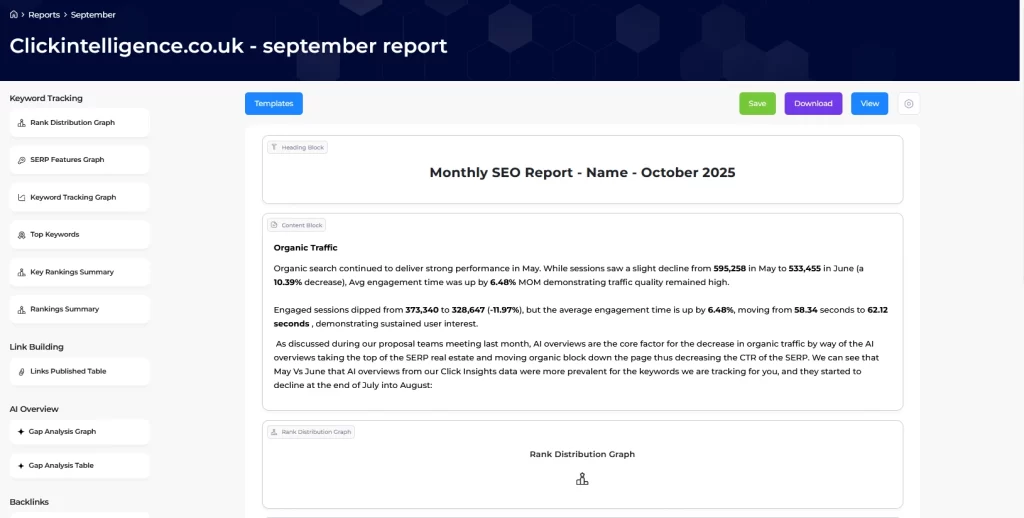
So, what areas of digital marketing can be turned into automated SEO tasks? While it can’t replace a human expert’s strategic or creative thinking, it can help to speed up time-consuming tasks that follow a set process. Things like:
Where Automation Falls Short
What about the limitations of SEO automation? Automation can handle the repetitive, data-related tasks mentioned above, but human-led SEO wins every time in the following areas:
AI Tools, Automation, and Smarter SEO Workflows
SEO automation software and AI SEO tools have changed how digital marketing tasks are done. They’ve helped to make SEO workflows more efficient and allow teams to focus their efforts on other areas. However, automation can’t just replace these human experts. Instead, it should be used carefully alongside professional expert insights to get the best results.
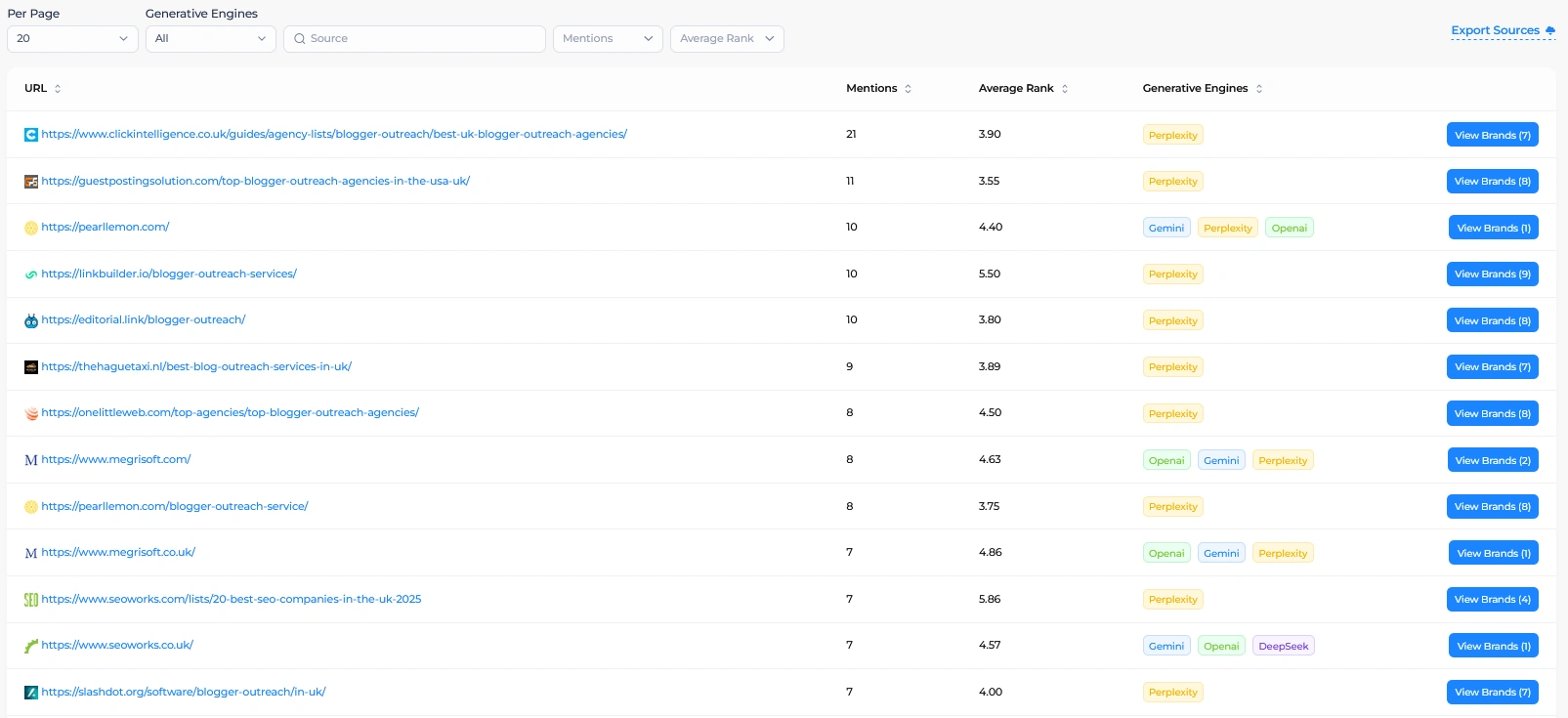
Click Insights provides automated data-led SEO insights so that teams can monitor performance across hundreds of pages and clients without getting bogged down in the details. It offers scalable reporting and AI-powered visibility tracking so SEO teams can concentrate on analysing trends, nailing their strategies, and creating campaigns that bring excellent results, which is what it’s all about after all. Click Insights offers process optimisation at its best.
What The Evidence Shows So Far
Automation delivers the best results when it supports an SEO strategy instead of replacing it entirely. Agencies that use automation tools for reporting, tracking keywords, and technical auditing can access SEO performance data and spot problems a lot quicker than if they were to do those tasks manually.
What’s more, campaign efficiency is boosted when automation with expert oversight is combined. By getting rid of repetitive tasks, agencies can concentrate on other areas of SEO that create impact. When used responsibly as a tool instead of a replacement, automation can help produce measurable outcomes that help teams scale up.
Preparing Your SEO Strategy for the Automation Era
There’s no denying that the future of SEO will mean that automation is here to stay. However, it’s important that your automated SEO strategy does not involve all aspects of your digital marketing efforts. The best and most effective strategies are the ones that balance automation and human insights, leaving the important decisions about campaign control and direction up to the experts.
The right tools used correctly can help you build scalable SEO strategies that deliver meaningful results. Click Insights’ automated reporting tools and Click Intelligence’s SEO services can help you take your SEO to the next level, thanks to a combination of select automation and dependable human insight. Want to learn more? Book a call today!

Instead of scrolling through pages and pages of endless search results, more people are now…

When your target customer heads to Google to search for a product or service, or…
Download our free Millionaires SEO Guide Today!
Here is how to find the perfect link building partner, download today!

While the fundamentals of SEO remain the same no matter the size of your business, if you are an enterprise…
Instead of scrolling through pages and pages of endless search results, more people are now…
When your target customer heads to Google to search for a product or service, or…

Artificial intelligence (AI) is changing the way that people are searching for information. Tools like…

For years, brands across industries have had one focus: getting higher Google rankings so their…

If you've ever tested your website using Google PageSpeed Insights, you've probably been met with…

On June 24, 2026, Google announced that it had started rolling out its latest spam…
As one of the top SEO agencies out there, our duties extend beyond creating SEO…
There’s no hiding from it. AI search and large language models (LLMs) like ChatGPT and…
If you are looking to increase your traffic, sales & leads, let's have a chat!

The team will usually respond within 1 hour.