Choosing the right SEO toolkit can be the difference between confident decision-making and constantly second-guessing your strategy. Agencies, brands, and enterprise teams all need reliable data to understand visibility, outperform competitors, and produce actionable reports their clients can trust. This is why the spyfu vs semrush comparison comes up so often—and why platforms that focus on clarity and insight, like Click Insights, are becoming increasingly popular.
Before diving into the head-to-head between SpyFu and SEMrush, it’s worth exploring why you may want to broaden your search beyond traditional tools.

Why Should You Look at Click Insights?
Search analysis has evolved dramatically. From tracking AI-driven results to keeping pace with LLM-powered search changes, marketers need tools that go beyond surface-level metrics. Click Insights has stepped into that gap with a platform that prioritises digestible data, real-time monitoring, and modern ranking analysis. For teams juggling multiple clients or complex campaigns, this can be an invaluable shift.
Below is a breakdown of all three platforms, Click Insights, SpyFu, and SEMrush, to help you decide which is right for your needs.
1. Click Insights

Key Features
Click Insights focuses on clean, intuitive dashboards that prioritise clarity over clutter. Its tools are built for accuracy across evolving search landscapes, especially when analysing rankings affected by AI responses. Features include LLM rank visibility tracking, competitor insights, SERP change alerts, and a streamlined interface suitable for users at any skill level. It also incorporates a modern keyword rank tracker for daily performance monitoring, alongside dedicated modules that help you understand how new search formats reshape your visibility.
Pricing
Click Insights offers tiered pricing suitable for freelancers, agencies, and larger organisations. Plans scale based on tracked keywords, domains, and access levels, making it simple to match the toolset to your team’s size and requirements.
Who Is It For?
Ideal for anyone looking for simple, clear, and modern reporting—particularly teams who need fast, confident insights rather than bloated toolkits. It’s also a strong fit for users navigating AI-generated SERP changes and those looking for more intuitive dashboards.
Pros
- Easy-to-read dashboards designed for efficiency
- Excellent insight into AI-affected SERPs through its AI overviews tracker
- Clear reporting for multiple domains and clients
- Strong alternative to complex legacy platforms
Cons
- Not as feature-heavy as older all-in-one suites
- Best suited to ranking and visibility rather than full-funnel marketing tools
2. SpyFu
Key Features
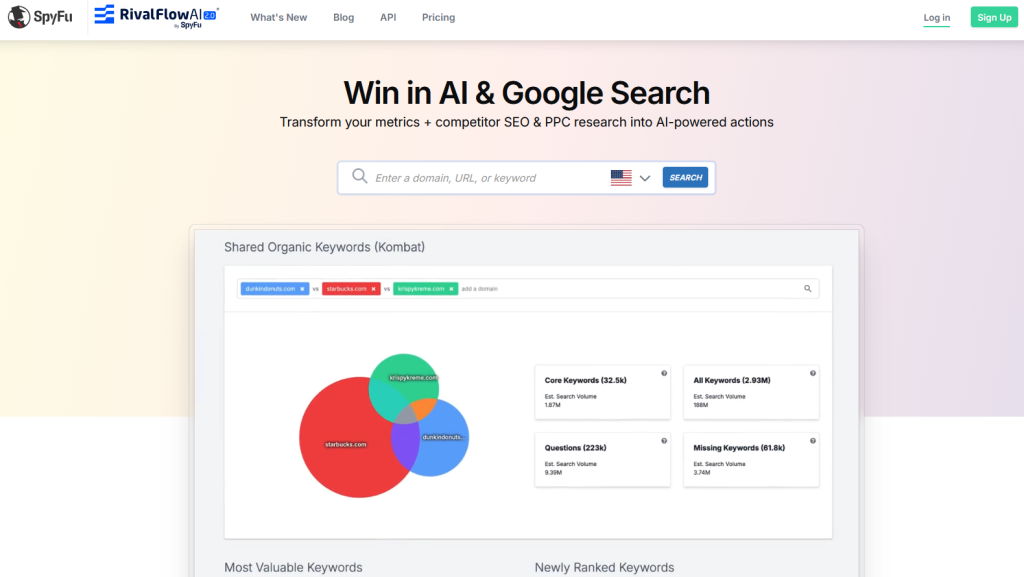
SpyFu is well-known for its deep competitor intelligence. It excels at revealing which keywords competitors bid on, which ads they run, and what their historical strategies look like. This makes it useful for teams wanting to analyse long-term patterns rather than snapshot data.
Pricing
SpyFu’s pricing is fairly accessible, particularly for smaller teams or freelancers looking for value without compromising on competitive insights.
Who Is It For?
SpyFu works well for marketers who prioritise competitor data over broader SEO features. Those focused heavily on PPC analysis or keyword strategy development may find its datasets particularly valuable.
Pros
- Strong competitor keyword intelligence
- Useful insights for PPC campaigns
- Cost-effective plans for smaller teams
Cons
- Interface can feel dated
- Less comprehensive than larger SEO platforms
- Reporting tools are limited compared to more modern solutions
3. SEMrush
Key Features
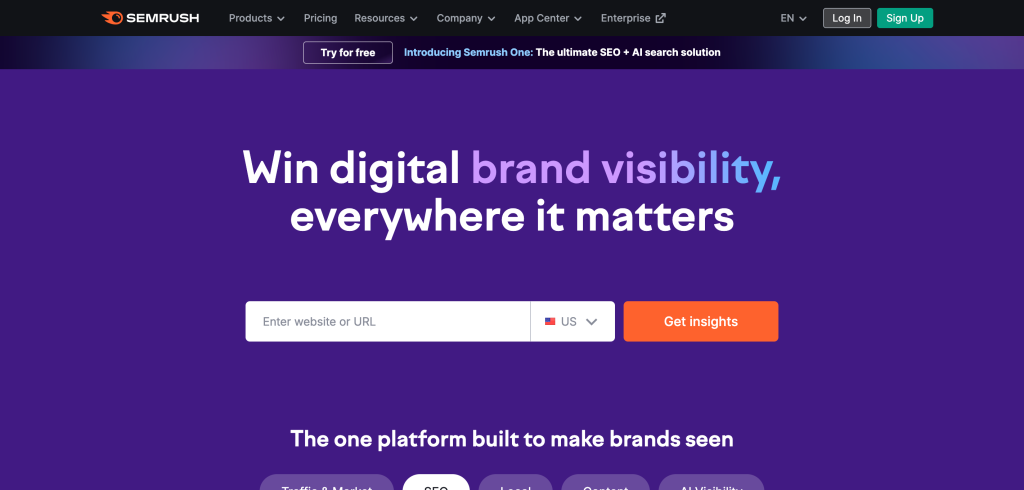
SEMrush is a large all-in-one tool offering SEO, PPC, social media, and content marketing analysis. It includes expansive keyword databases, backlink tools, competitor tracking, and auditing capabilities suitable for larger teams. Its wide breadth can support anything from SEO software for agencies to full-stack marketing departments.
Pricing
SEMrush’s pricing sits at the higher end of the market, reflecting its enterprise-level feature set. Users often pay extra for add-ons, which is something to consider if you only need a narrow range of tools.
Who Is It For?
SEMrush is most suitable for teams needing a full marketing suite, including paid ads, content planning, and social reporting. It also fits well into SEO software for business setups that require multiple tool types in one platform.
Pros
- Extensive toolset across SEO, PPC, and social
- Strong auditing and research capabilities
- Suitable for large organisations requiring wide-ranging insights
Cons
- Expensive, especially when opting into add-ons
- Interface can be overwhelming for new users
- More complex than necessary for small teams
What’s the Best SpyFu vs SEMrush Alternative?
For many teams, the semrush vs spyfu question comes down to simplicity versus volume. If you need a modern, clear, and focused platform without the clutter of all-in-one suites, Click Insights is an excellent alternative. Its strengths lie in streamlined reporting, modern ranking analysis, and accessible dashboards built for real-world performance monitoring. It also offers valuable features such as SEO reporting, Google analytics reporting dashboard integration, and support for White label SEO software, making it suitable for agencies seeking client-ready data. Larger teams can use it confidently as SEO software for enterprise, while smaller teams benefit from its clean, fast approach.